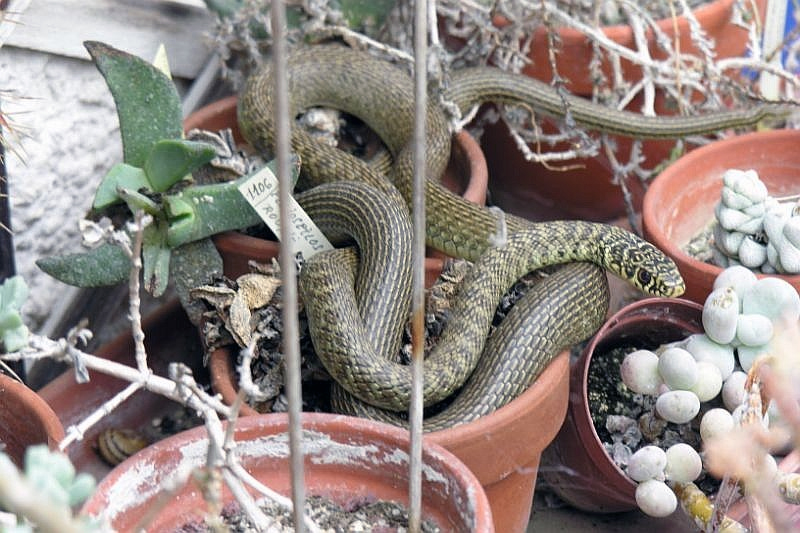

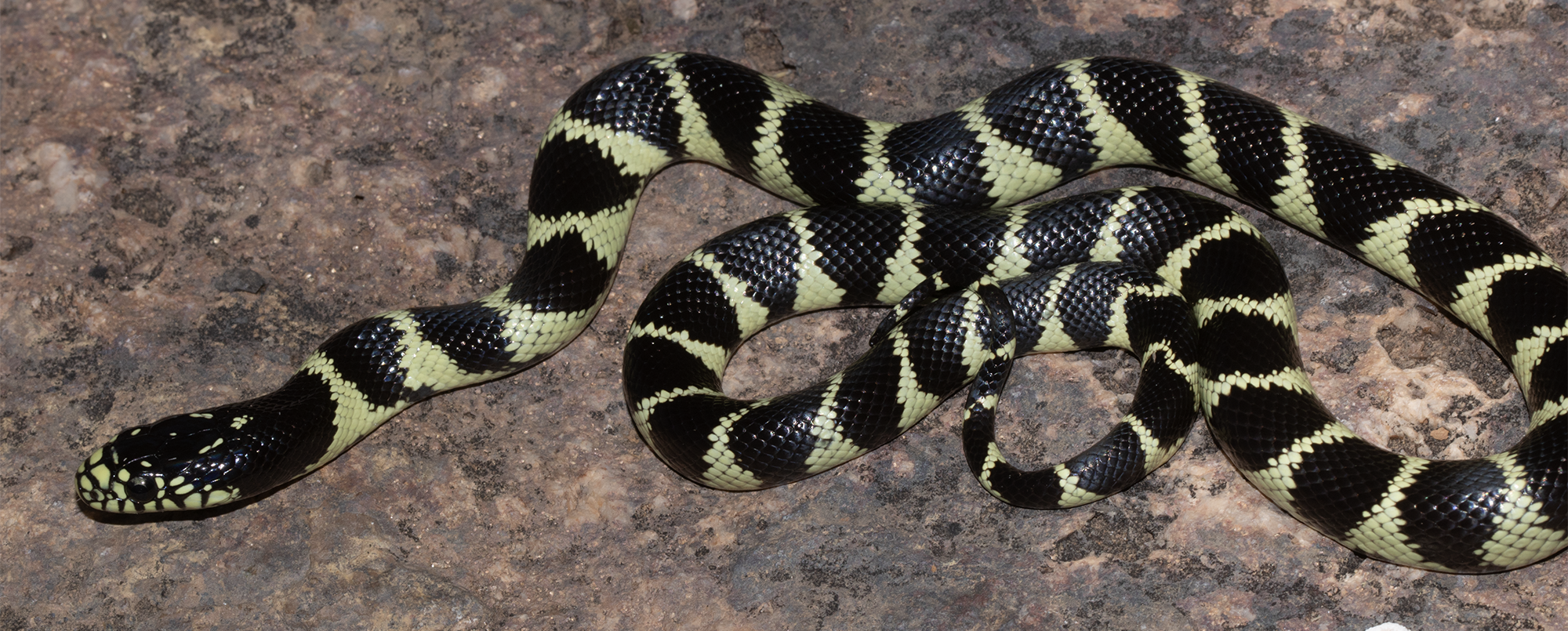

The California Kingsnake (Lampropeltis californiae) is an invasive, secretive snake with scarce ecological data needed for control. Native to the western US and northwestern Mexico, it is mostly diurnal but hard to detect due to its fossorial behavior and periods of inactivity. Since it was first seen in Gran Canaria in 1998, its range has grown steadily, leading to the extinction of the Gran Canaria giant lizard (Gallotia stehlini) and a drop of more than 80% in the populations of the Gran Canaria skink (Chalcides sexlineatus) and Boettger’s wall gecko (Tarentola boettgeri). It also triggers phenotypic changes, stress responses, and trophic cascades that increase invertebrates where reptiles are depleted. Control efforts using trapping and active searches have been ongoing since 2007, intensified since 2019, but the invasion continues. Lacking sufficient information about microhabitat preferences makes it harder to set traps and catch animals by hand. Active search efficiency is affected by staff turnover—new temporary workers hired annually for up to 6 months, aligning with the species’ active season—relying on trial-and-error learning or staff experience to improve success rates.
In this study, Maestresalas et al. (2026) characterize the shelter-use regime and the biotic and abiotic factors driving microhabitat selection by California kingsnake shelters on Gran Canaria, in the Canary Islands. The intent is to help inform management. They expected that this snake, like other snakes (including closely related species), would use few shelters, even revisiting them, and would prefer rocky areas with dense vegetation.
This study underscores the importance of incorporating shelter-use regimes and microhabitat preferences into targeted management strategies for the invasive California Kingsnake in Gran Canaria. Control efforts should focus on areas rich in rocks, stones, and dense shrub cover, while avoiding open zones lacking these features. Due to the widespread presence of suitable microhabitats, the island’s favorable climate, and the species’ generalist ecology, managing its spread requires prioritizing high-suitability areas and recognizing potential routes for range expansion. Overall, integrating detailed habitat-use and spatial-ecology data into invasive species management can improve efficiency, reduce costs, and enhance conservation outcomes, especially when applied early in the invasion process. We also recommend applying these methods in regions hosting secretive and understudied reptile species.
References
Maestresalas B, Piquet JC, López-Darias M. Shelter and Microhabitat Use by an Invasive Snake: Control Implications. Global Ecology and Conservation. 2026 Jan 9:e04063.