-
Spider Predation On A Snake
posted on
In South Africa button spiders (Latrodectus, Theridiidae) or widow spiders a they are called elsewhere in the world are represented by at least six species. The photos at the left were reported taken in 2004 in South Africa. The snake is reported to be a 14cm long Aurora house snake (Lamprophis aurora) and the event…
-
Polysternon isonae, A New Bothremydid Turtle
posted on
Researchers at the Institut Català de Paleontologia Miquel Crusafont (ICP), the Museu de la Conca Dellà (MCD) and the Universitat Autònoma de Barcelona (UAB) have published this week in the online edition of the journal Cretaceous Research the discovery and description of a turtle from the end of the age of dinosaurs. Above left: a…
-
The Fungoid Frog, More Cryptic Species?
posted on
Hylarana malabarica. Vagator, Goa, India. Photo credit: Rakeshb The Fungoid Frog, Hylarana malabarica, is widely distributed in peninsular India, Assam, and Meghalaya and because of its wide distribution the species is categorized under Least Concern in the IUCN Red Listof Threatened Species. But, despite its widespread distribution, H. malabarica shows a patchy distribution in the…
-
Masked Water Snakes Revised
posted on
A. Homalopsis buccata, B. H. mereljcoxi, C. H. nigroventralis, D. H. semizonata. Photo credits: R. Steubing, J. C. Murphy, and J. Vidum Masked water snakes of the genus Homalopsis are the largest members of the family Homalopsidae, exceeding 1.3 m, and are abundant in the low elevation wetlands of Southeast Asia. They have robust bodies,…
-
The Tadpole & Buoyancy
posted on
Survival and reproduction of many aquatic and semi-aquatic animals can depend upon how well they float. Tadpoles use various strategies to attain buoyancy, depending upon their stage of development and location in still or turbulent waters. Researchers have taken a closer look at the developing frog’s strategies to achieve buoyancy. A report in the current…
-
The Chikilidae- A New Family of Ambibians
posted on
Chiklil fulleri a member of the family Chikilidae. A team of biologists led by University of Delhi professor Sathyabhama Das Biju spent more than five years digging through forest soils in the rain, and discovered a new family of amphibians -the Chikilidae – endemic to northeast India but with ancient links to Africa. Their discovery…
-
New Sea Snake From Australia
posted on
Photo credit Brian G. Fry A paper, published yesterday in the journal Zootaxa, announces the discovery and notes that the new species called Hydrophis donaldii is unique in having raised scales. “H. donaldii had evaded earlier discovery as it prefers estuarine habitats that are poorly surveyed and not targeted by commercial fisheries”, explained Dr. Bryan Fry, a co-author…
-
Chrysosporium Threatens Endangered Rattlesnake
posted on
The Chicago Tribune is carrying the following story: CHAMPAIGN, Ill.— A fungus rarely seen in the wild is killing certain southern Illinois rattlesnakes while cropping up in the northeastern U.S., wildlife specialists said. Matthew Allender, a wildlife veterinarian and University of Illinois visiting instructor of comparative biosciences, said that in 2008 biologists reported to him…
-
Fungal Ant Gardens as Incubators for Snake Eggs
posted on
Parental care in snakes is poorly documented. It has been known since the 18th century that female pythons will not only guard their eggs but warm them when the ambient temperature drops; female king cobras have been long known to build nests of decomposing vegetation for their eggs and stay nearby; and more recently maternal…
-
Another Large Python bivittatus from Everglades NP
posted on
The following is from the National Parks Traveler webiste. The story is dated February 17, 2012. A Burmese python more than 16 feet in length and tipping the scales at 140 pounds has been captured at Everglades National Park, evidence of the problem park officials face with the spread of these non-native constrictors. The female snake was…
-
The Smallest Lizard
posted on
Size determines much biology in living organisms: what an organism can eat and what eat its, how fast or slow an organims may loose or gain heat and water, and where an organism can or cannot hide. The largest animals tend to be well known, but the smallest may go undetected and overlooked. Until today,…
-
Hormone Triggers Production of Sex Pheromones in Thamnophis
posted on
. Garter snake dens in the Interlake region of Manitoba, Canada, are the scene of a mating frenzy each spring and provide an opportunity for researchers to work out the mechanisms by which snake’s choose their mates. The following is based upon an article published in The Journal of Experimental Biology that experimentally demonstrates that…
-
Snake Venom Forensics
posted on
In the science fiction classic Blade Runner, Harrison Ford’s character Rick Deckard tracks down a replicants (synthetic humans) using a scale from an artificial snake. The planet has been turned into a sewer, and most of its life forms other than humans have been obilterated. While we have not quite reached the level of environment…
-
Loggerhead Feeding Ecology
posted on
GAINESVILLE, Fla. – Satellite tracking of threatened loggerhead sea turtles has revealed two previously unknown feeding ‘hotspots’ in the Gulf of Mexico that are providing important habitat for at least three separate populations of the turtles, according to a study published recently in the journal Biological Conservation. The two sites, located in the open waters…
-
A New Semi-Aquatic Lizard from Peru
posted on
There are relatively few aquatic or semi-aquatic lizards. The marine iguana feeds underwater and the common iguana uses water to escape predators, as do a few Anolis; some monitor lizards regularly use aquatic habitats; a few teiids also use aquatic habitats for escape (Kentropyx) and the caiman lizards of the genus Dracaena feed in the…
-
A 1973 Death from a Sistrurus catenatus Bite Recounted
posted on
An article in TheDailyNews.com (New York) recounts the 1973 death of a man from the bite of an eastern massasauga. HIDDEN HISTORY: Snake bite kills man in Bergen swamp, 1973 By Mark Graczyk The Bergen Swamp Wildlife Area is a swamp and nature preserve located within the towns of Bergen and Byron. It’s a wonderful spot…
-
Anoles Demonstrate the Founder Effect
posted on
Anolis sagrei. Photo credit Neil Losin The following is a press release from the National Science Foundation. Biologists who released lizards on tiny uninhabited islands in the Bahamas have uncovered a seldom-observed interaction between evolutionary processes. Jason Kolbe, a biologist at the University of Rhode Island (URI)–along with colleagues at Duke University, Harvard University and…
-
Salamanders & Road Salt
posted on
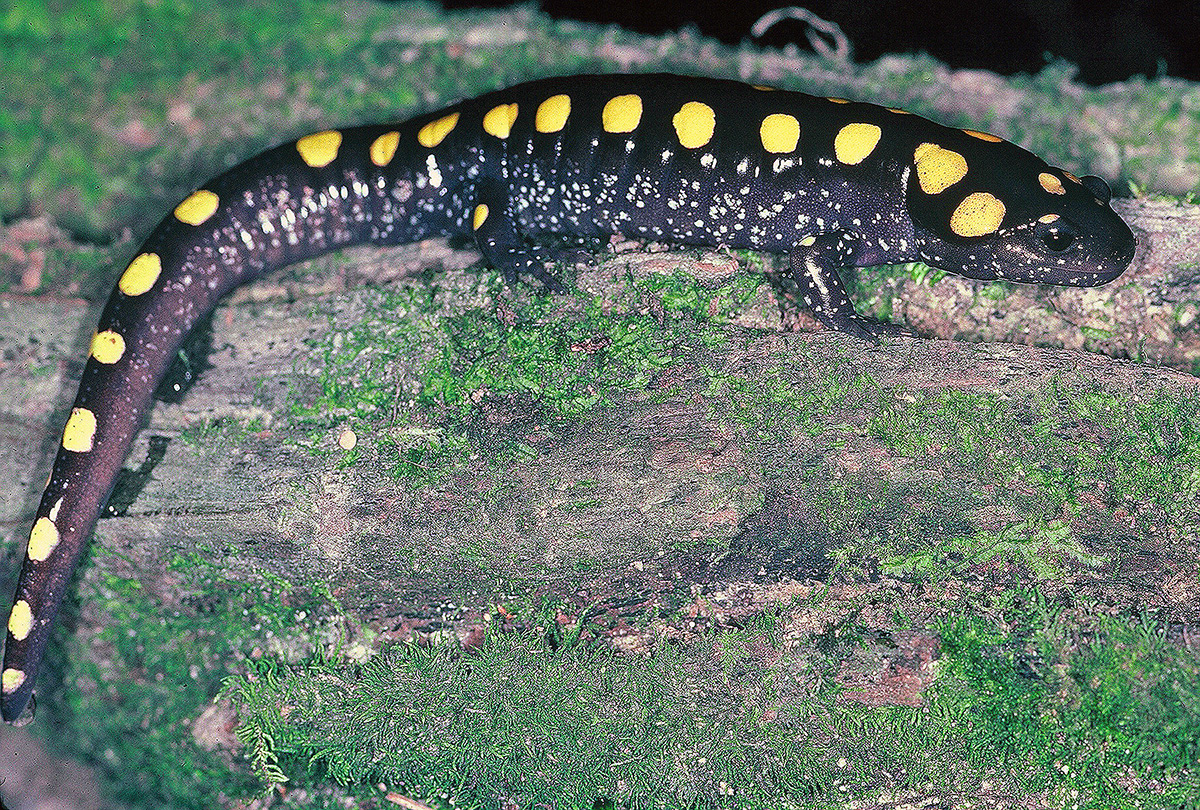
Salamanders breeding in roadside ponds are exposed to various contaminants from road runoff. Chief among these is sodium chloride from road salt, which reaches average concentrations of 70 times higher in roadside ponds compared to woodland ponds located several hundred feet from the road.

SerpentResearch.Com
Amphibians, Reptiles, & Natural History





You must be logged in to post a comment.