-
Discovering the lightbulb lizards of Ecuador
posted on

Alejandro Arteaga, a herpetologist in Ecuador sent out out the following email. If you have the resources for helping Alejandro I encourage you to do so. Today, I want to reveal a project I have been advancing in secret. During the past five years, my team and I have been studying an enigmatic group of…
-
Successful Skinks
posted on

Geckos and skinks are lizard lineages that have been remarkably successful, as measured by the number of species recognized as well as , the size of their geographic range, the variety of habitats, ecological niches, and the diversity of their morphological and life-history features. The range, ecology, morphology, and life history of the varied lineage…
-
Discovering the lightbulb lizards of Ecuador
posted on
Alejandro Arteaga, a herpetologist in Ecuador sent out out the following email. If you have the resources for helping Alejandro I encourage you to do so. Today, I want to reveal a project I have been advancing in secret. During the past five years, my team and I have been studying an enigmatic group of…
-
Another new Bent-toed Gecko
posted on
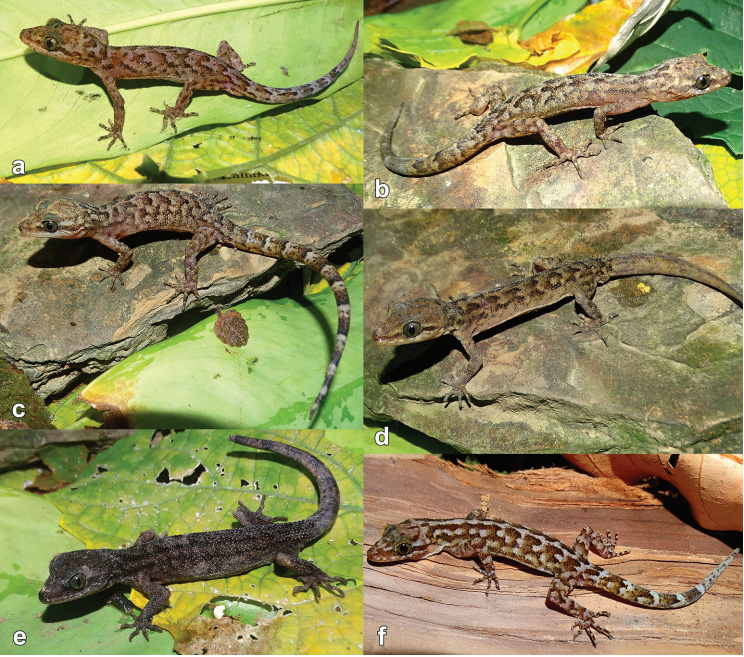
The new species has only been found at the type locality in Ngopa town, one of the townships in Champhai district of the south-eastern part of Mizoram, in northeast India
-
Monitor Lizard – Otter Interaction
posted on
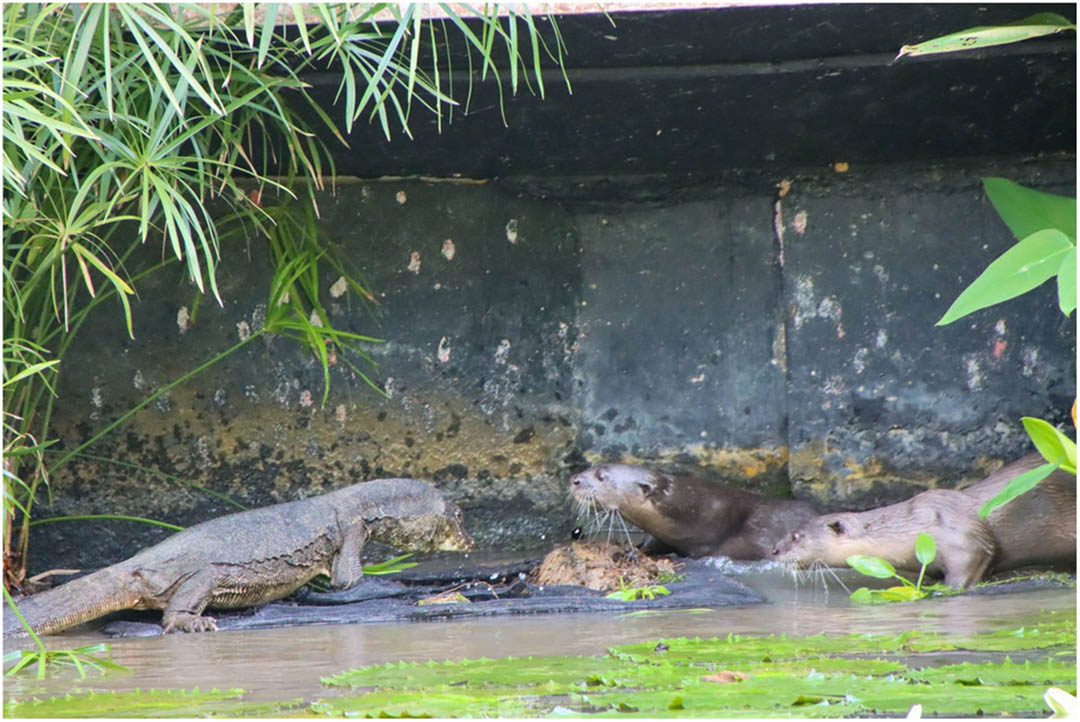
Monitor lizards encounters with otters are cautious. The presence and number of otter pups are positively associated with otter aggression. The otters tended to be more vigilant in groups with more pups and more vigilant on land than water.
-
A new lizard from the Triassic
posted on

The origins of mammals and birds are relatively well understood, while the roots of squamates have been obscure. In a new paper (Whiteside et al. 2022) report a modern-type lizard from the Late Triassic of England [202 million years (Ma)], comprising a partial skeleton, skull, and mandibles. It displays at least 15 unique squamate traits…
-
The Union Island Gecko population recovers
posted on
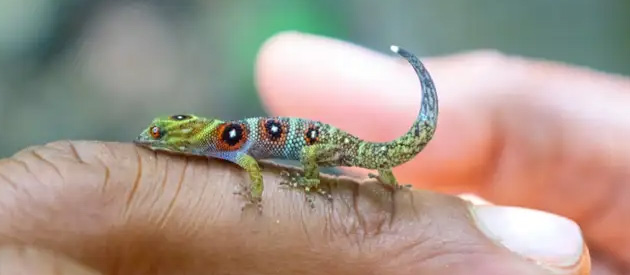
The population of Union Island geckos plummeted due to the illegal international pet trade, but conservationists working with local people in Saint Vincent and the Grenadines have helped increase the population.
-
Overlooked species diversity in the Nidua Fringe-fingered Lizard
posted on

In a recent paper Liz et al. (2022) noted that hyper-arid sandy and rocky fields rank among the least biologically diverse habitats, yet knowledge of local biodiversity patterns is poor. The following is a slightly edited version of their introduction to the article. In the Sahara Desert, paleoclimate oscillations affected the extent of hyper-arid habitats,…
-
The Genome of the Guatemalan Beaded Lizard
posted on
Guatemalan Beaded Lizards are known only from the arid regions of the upper Motagua Valley in eastern Guatemala. The isolated desert habitats in this region are surrounded by mountains covered with humid forests, a habitat foreign to this species. The desert patches experience a short but intense annual rainy season, followed by a very long…
-
Lizards & Climate Change
posted on
Lizards and Climate Change Temperature is an important factor affecting biological processes in all forms of life. For example, geographical distribution, the speed of enzyme actions, muscle contractions, defense behavior, foraging performance, and reproduction are all impacted by temperature. Therefore it is not surprising that global warming is equal to habitat loss as the most…
-
The Giant Whiptail
posted on
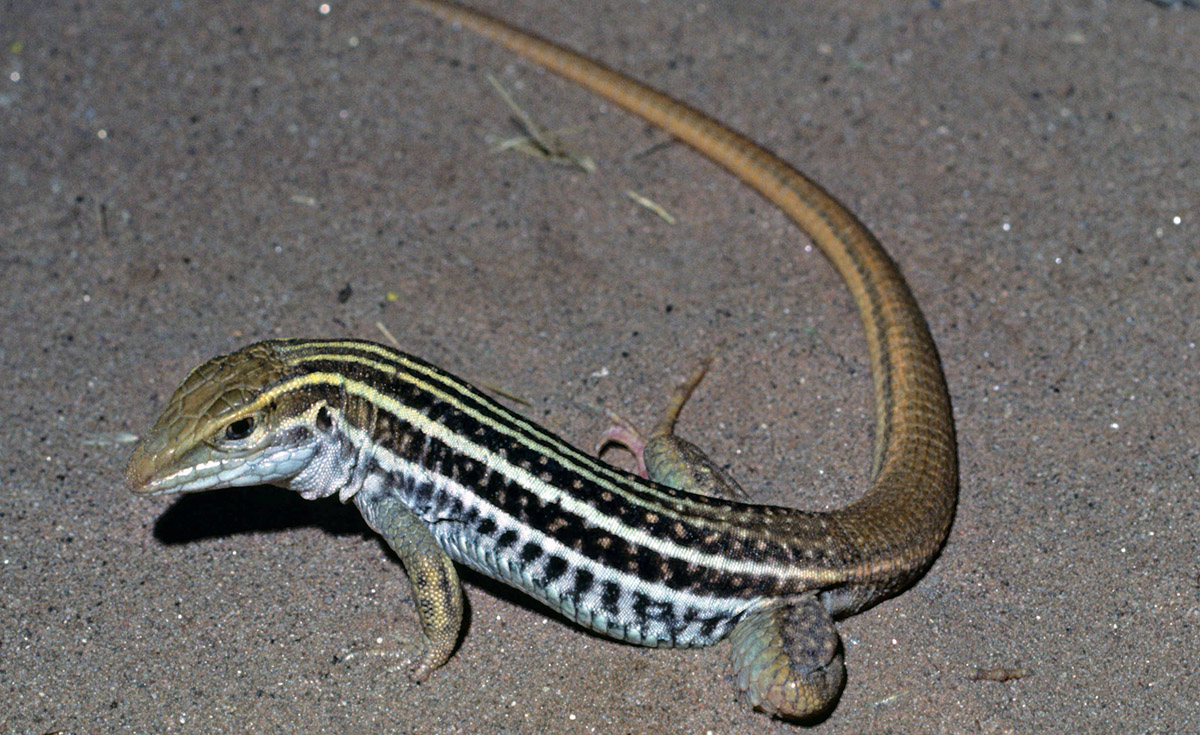
The species show considerable ontogenetic changes and while juveniles and young adults are striped, older adults lose the stripes are spotted.
-
Invasive Lizards in Florida, and why are there so few in Arizona
posted on
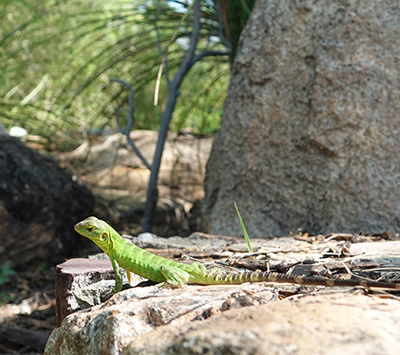
In 2020 I was visiting friends in southern Florida. They picked me up at the Fort Lauderdale-Hollywood International Airport, and within a few minutes, we were headed south. Looking out the car window, I was astonished to see a Brown Basilisk Lizard, Basiliscus vittatus, trying to walk across the freeway. The lizard was a species…
-
A micro-endemic gecko threatened by an invasive tree.
posted on
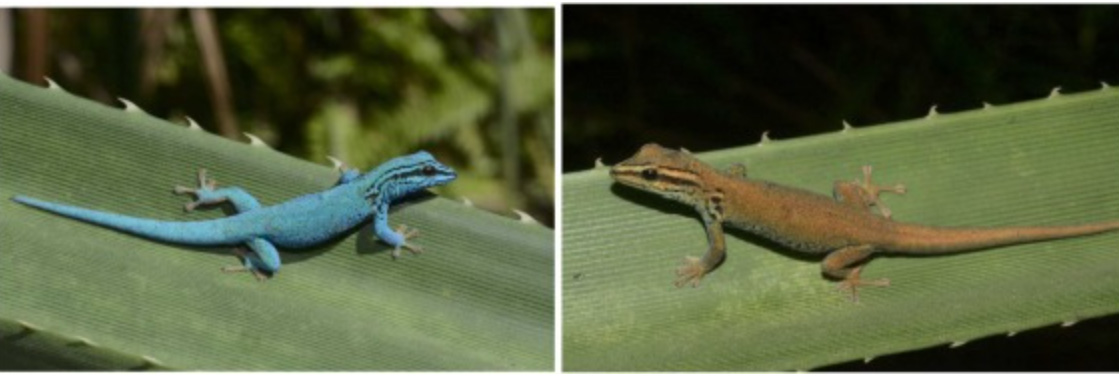
In the photo above…an adult male (left) and female (right) of Lygodactylus williamsi on a leaf of Pandanus rabaiensis in Kimboza Forest Reserve. Photos by John Lyakurwa. The Electric Blue Gecko, Lygodactylus williamsi, is a small, diurnal, gekkonid. Dominant males are a bright and vibrant turquoise-blue body, and retain this color throughout the year, while females are green-bronze.…
-
A New Dwarf Anole from Cuba
posted on
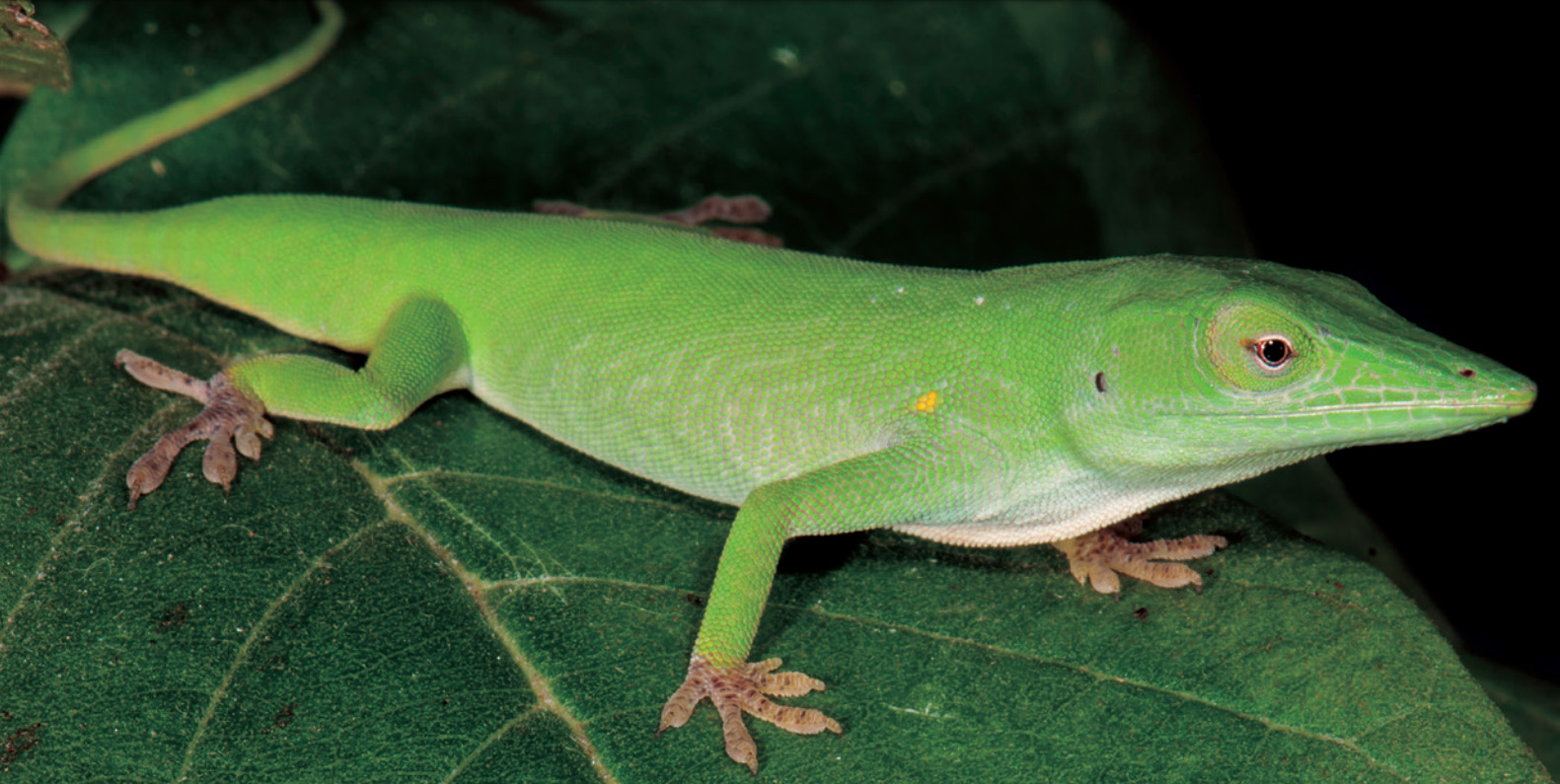
Diaz et al. (2022) describe a new species of this subgroup from western Cuba based on genetic and morphological differences from other species.
-
A new spiny gymnophthalmid from the Pacific slopes of the Ecuadoran Andes
posted on

The holotype of Echinosaura fischerorum sp. nov. (male, DHMECN 15208) in dorsal (upper left), ventral (upper right), and lateral (bottom) views. Scale bars = 10 mm. Photographs by MYM.
-
Pacific Island Anoles
posted on
Above: Seven species of anoles found on the islands in the Eastern Tropical Pacific (ETP). Top row, left to right: Dactyloa agassizi (Isla Malpelo), Dactyloa gorgonae (Isla Gorgona), Norops townsendi (Isla Cocos). Bottom row: Norops medemi, Norops parvauritus, Dactyloa princeps, Dactyloa chocorum (all Isla Gorgona). There are 435 species in the genus Anolis (sometimes divided into Norops and Dactyola) and while they are one…
-
The Smallest Lizard
posted on
Size determines much biology in living organisms: what an organism can eat and what eat its, how fast or slow an organims may loose or gain heat and water, and where an organism can or cannot hide. The largest animals tend to be well known, but the smallest may go undetected and overlooked. Until today,…
-
A New Semi-Aquatic Lizard from Peru
posted on
There are relatively few aquatic or semi-aquatic lizards. The marine iguana feeds underwater and the common iguana uses water to escape predators, as do a few Anolis; some monitor lizards regularly use aquatic habitats; a few teiids also use aquatic habitats for escape (Kentropyx) and the caiman lizards of the genus Dracaena feed in the…
-
Anoles Demonstrate the Founder Effect
posted on
Anolis sagrei. Photo credit Neil Losin The following is a press release from the National Science Foundation. Biologists who released lizards on tiny uninhabited islands in the Bahamas have uncovered a seldom-observed interaction between evolutionary processes. Jason Kolbe, a biologist at the University of Rhode Island (URI)–along with colleagues at Duke University, Harvard University and…

SerpentResearch.Com
Amphibians, Reptiles, & Natural History





You must be logged in to post a comment.