-
Social Western Diamondbacks
posted on

Social behavior in snakes is under-studied and, as a result, poorly known. Using social network analysis, Tetzlaff et al. (2023) examined social behavior in the Western Diamondback Rattlesnake, Crotalus atrox, from 2001 to 2015. They used behavioral observations via radiotelemetry and genotypic data from a long-term (>10 years) study of the Western Diamondback Rattlesnake.
-
Time to first shed
posted on

An intriguing example is the puff adder (Bitis arietans), which sheds its skin shortly after birth. These viper species use chemical camouflage to evade detection by predators. Although their shed skin is easily detectable, these snakes move to new locations immediately after shedding to maintain camouflage.
-
Terciopelo’s diet shift from juvenile to adult
posted on

The diet of Bothrops asper changes with age. Young individuals feed on amphibians, centipedes, reptiles, and mammals. Older individuals specialize in mammals.
-
Palestine Viper Venom
posted on
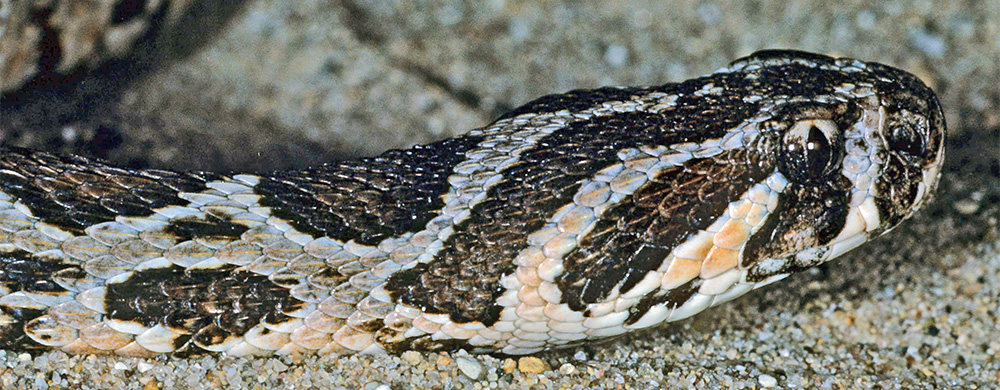
Some of the most medically important snakes in the world belong to the in the genus Daboia. These vipers are responsible for some of highest numbers of human envenomations.
-
Rattlesnake Venom Research in Ireland
posted on

Snake venom has long shown promise as a treatment for cancer in a wide range of animal trials dating back several years. Celtic Biotech isolated a protein in a type of rattlesnake venom that causes cancer cells to commit cell suicide.
-
Snake Removal in Urban Arizona
posted on

A home-owner encountering a rattlesnake in their yard, garage, or house can be un-nerving. As people build more houses in the Sonoran Desert, this kind of encounter becomes more frequent. In a recent paper, Batemen et al. (2022) analyze snake removals in a social-ecological context and it underscores the conservation benefits of researchers partnering with…
-
Proximity between Russell’s Viper and People in Rural India
posted on
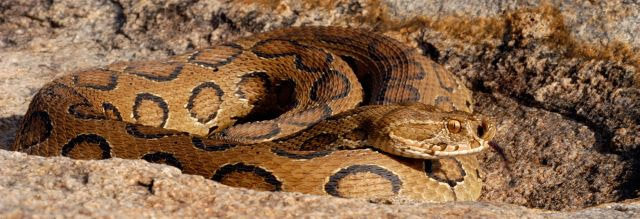
Russells Viper, Bannerghatta, India. Saleem Hameed <saleemham at rediffmail.com>, CC BY 2.5 <https://creativecommons.org/licenses/by/2.5>, via Wikimedia Commons
-
Chrysosporium Threatens Endangered Rattlesnake
posted on
The Chicago Tribune is carrying the following story: CHAMPAIGN, Ill.— A fungus rarely seen in the wild is killing certain southern Illinois rattlesnakes while cropping up in the northeastern U.S., wildlife specialists said. Matthew Allender, a wildlife veterinarian and University of Illinois visiting instructor of comparative biosciences, said that in 2008 biologists reported to him…
-
A 1973 Death from a Sistrurus catenatus Bite Recounted
posted on
An article in TheDailyNews.com (New York) recounts the 1973 death of a man from the bite of an eastern massasauga. HIDDEN HISTORY: Snake bite kills man in Bergen swamp, 1973 By Mark Graczyk The Bergen Swamp Wildlife Area is a swamp and nature preserve located within the towns of Bergen and Byron. It’s a wonderful spot…

SerpentResearch.Com
Amphibians, Reptiles, & Natural History





You must be logged in to post a comment.