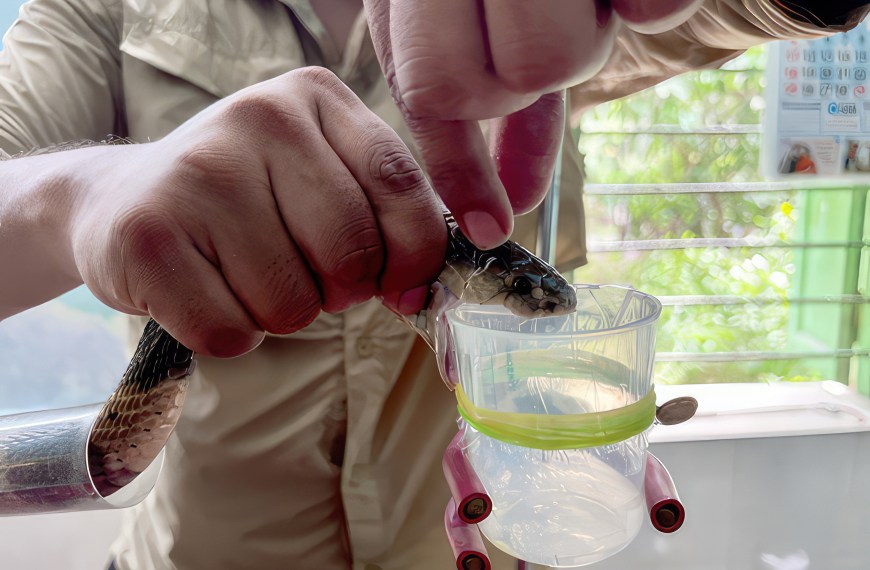

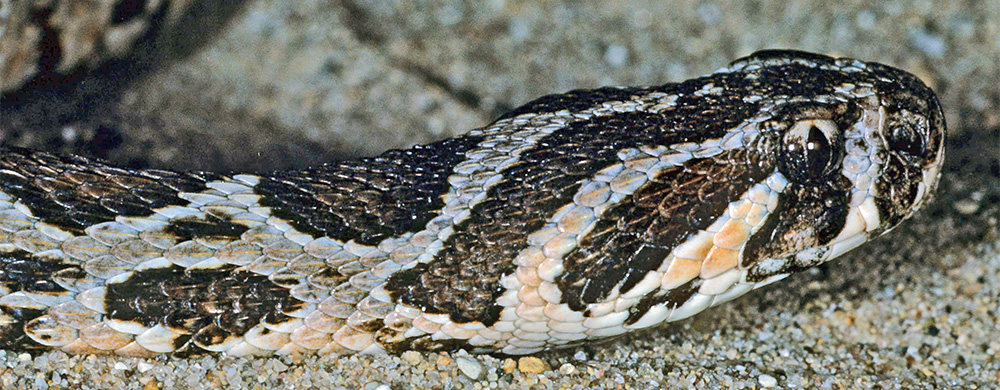

Some of the most medically important snakes in the world belong to the in the genus Daboia. These vipers have been attributed to the highest number of human envenomings, deaths and disabilities. Therefore, the venoms of Russell’s vipers (D. russelii and D. siamensis) have been the primary focus of research. In contrast, the composition, activity, ecology and evolution of venom of their congener, the Palestine Viper, Daboia palaestinae, have remained largely understudied. In a recent paper Senji Laxme et al. (2022) unravel the factors responsible for the enhanced medical relevance of D. russelii in comparison to D. palaestinae. They comparatively evaluated the venom proteomes, biochemical activities, and mortality and morbidity inflicting potentials. The authors also examine the synthesis and regulation of venom and the relative contribution of each venom gland by sequencing the tissue transcriptomes of both venom glands of D. palaestinae, and comparatively evaluating their contribution to the secreted venom concoction. The findings highlight the disparity in the venom composition, function, and toxicities of the two Daboia species. They also show that toxin production is not partitioned between the two venom glands of D. palaestinae.
Citation: Senji Laxme RR, Khochare S, Attarde S, Kaur N, Jaikumar P, Shaikh NY, Aharoni R, Primor N, Hawlena D, Moran Y, Sunagar K. 2022. The Middle Eastern Cousin: Comparative Venomics of Daboia palaestinae and Daboia russelii. Toxins 14(11):725.