-
Diet overlap in aquatic snake assemblages
posted on
Competition for prey is thought to be important in structuring snake assemblages. However, given the secretive behavior and low detectability of many snake species, this generalization is based on a limited number of studies, most of which focus on a single study site. In a forthcoming paper in the Journal of Zoology Durso et al…
-
Social female copperheads found to be non-kin
posted on
Recent observations suggest snakes may be far more social than previously thought, including the ability to recognize and group with kin, and provide parental care (defense) for young. Inclusive fitness theory predicts that benefits of such groupings should be greater when groups are composed of related individuals. Although the ability required to recognize kin under…
-
Eastern coral snake venom found to contain molecules from 15 toxin families
posted on
Snake venom is shaped by the ecology and evolution of the species that makes it. Evidence of positive selection in toxins have been consistently documented, reflecting the role of venoms as an ecologically critical phenotype. New World coral snakes (Elapidae) are represented by three genera and over 120 species and subspecies that are capable of…
-
Female mate choice in Hyla chrysoscelis
posted on
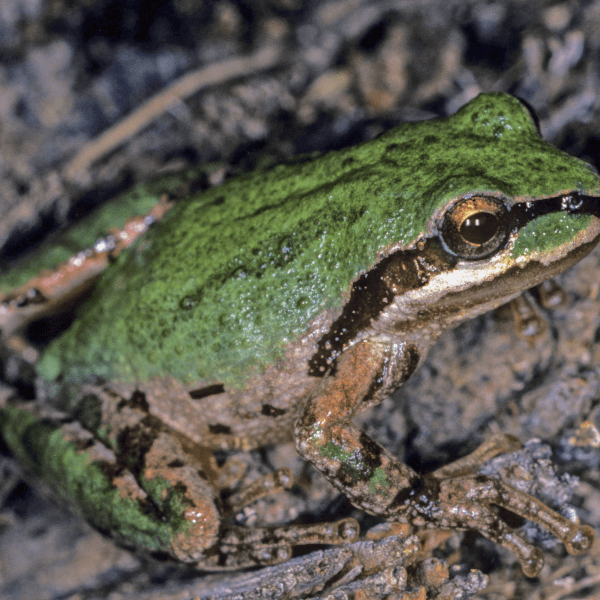
From frogs to humans, selecting a mate is complicated. Females of many species judge suitors based on many indicators of health or parenting potential. But it can be difficult for males to produce multiple signals that demonstrate these qualities simultaneously. In a study of gray tree frogs, a team of University of Minnesota researchers discovered…
-
Sea snakes disappear at Ashmore Reef despite protection
posted on
The Ashmore Reef National Nature Reserve was established in 1983 and covers 583 km2 Ashmore Reef contains seagrass beds, intertidal sand flats, coral reef flats, and lagoons, and supports an important and diverse range of species, including 14 species of sea snakes, a population of dugong that may be genetically distinct, a diverse marine invertebrate fauna, and…
-
The beaded lizard reassed
posted on
The beaded lizard (Heloderma horridum) has a fragmented distribution in Mesoamerica that extends from northwestern Mexico to eastern Guatemala. Locally known as the “escorpión” its natural history is surrounded by mystery, notoriety and misconception. Consequently, it is frequently slaughtered when encountered. Adding to this anthropogenic pressure, beaded lizard populations, with rare exceptions occur primarily in…
-
A second specimen of the bush viper, Atheris hirsuta
posted on
Atheris hirsuta The viper, Atheris hirsuta was described by Ernst & Rödel in 2002, based on a single specimen found near the ecological research station in the Taï National Park, Côte d’Ivoire. The holotype was found in secondary rainforest between a field station and the town of Taï. It was collected on a dirt road…
-
Suizo Report — Thanks and July 2013
posted on
Howdy Herpers, 07/31/13 Thank you cards are slugging their way toward the nine kind souls who gave our fiscal situation a jump start. Thanks to their efforts, we can not only keep the animals in the game that we have, but also add a few more. I do not wish to embarrass anybody by mentioning…

SerpentResearch.Com
Amphibians, Reptiles, & Natural History





You must be logged in to post a comment.