

SAN ANGELO, Texas (Concho Valley Homepage) — A lizard species historically known to thrive across the Edwards Plateau in Central and West Texas is no longer listed under the Endangered Species Act since a petition was filed in 2010.
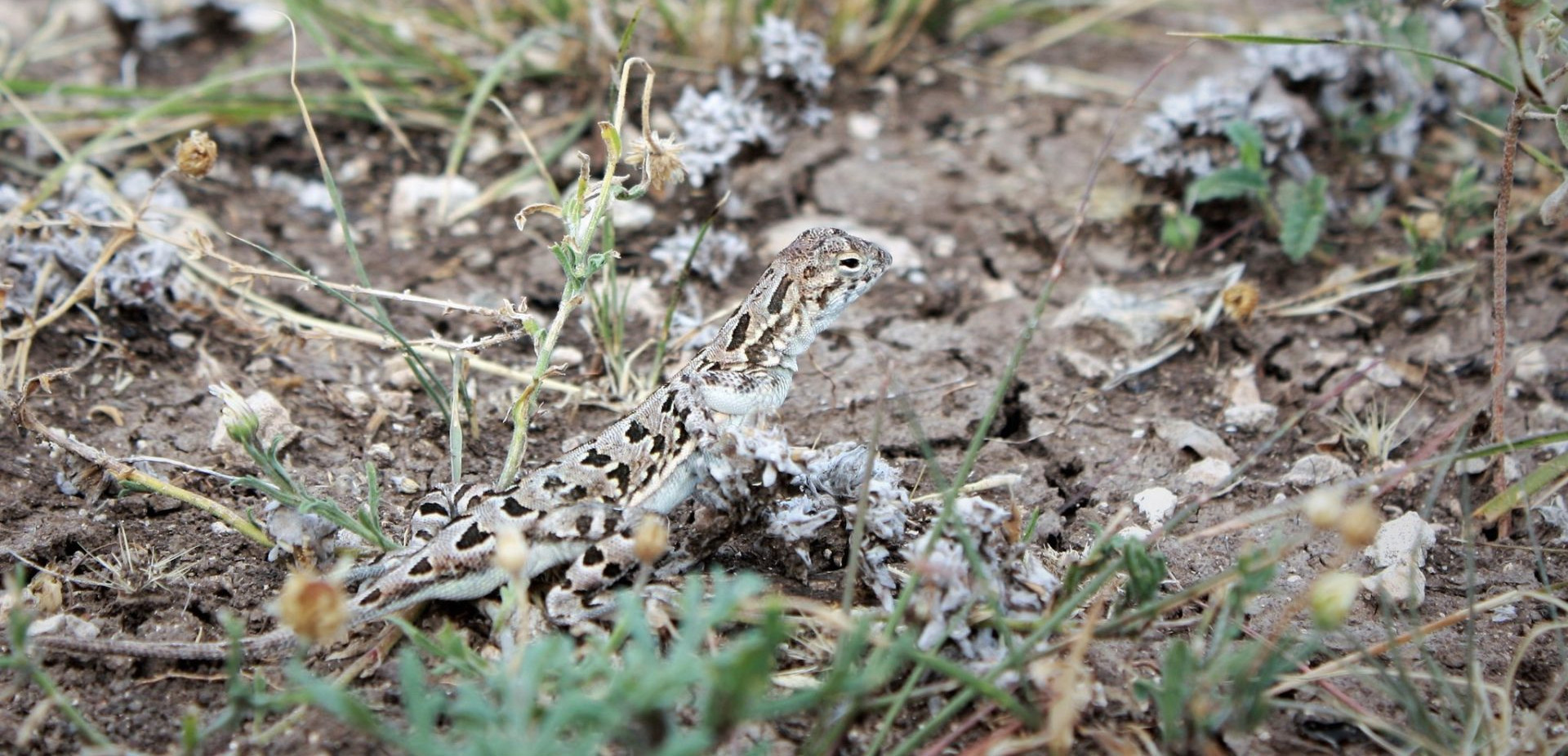
According to a press release from the U.S. Fish and Wildlife Service, the Plateau Spot-tailed Earless Lizard will no longer be listed due to recent research. This lizard with small concealed ears is found in grasslands across the Edwards Plateau in Central and West Texas.
Marking the 50th anniversary of the Endangered Species Act
Plateau spot-tailed earless lizard by Texas Parks and Wildlife Department
“We are excited to share the positive news that the Plateau Spot-tailed Earless lizard’s population is healthy and does not require protection under the ESA,” Jeff Fleming, the Service’s Acting Southwest Regional Director, said. “This outcome is a direct result of the dedicated efforts of researchers and conservation partners who have worked tirelessly to gather crucial data on this species. Their work has enabled the Service to make informed decisions about the lizard’s conservation status.”
Since a petition was filed in 2010 to help protect the lizard species and two other subspecies, a lack of research on the animal’s population status made it hard to assess the species’ true conditions. Because of this, a 90-day finding with a request for scientific information on the lizards was published the following year.
University researchers gathered important data on the lizard by conducting surveys and locating the species through funding from the Texas Comptroller’s Office and Texas Park and Wildlife Department. The U.S. Fish and Wildlife Service shared that these researchers documented habitat needs, land use, and genetics. This scientific information was used to draft the peer-reviewed Species Status Assessment for the U.S. Fish and Wildlife Service.
The Species Status Assessment showed that the “species maintains multiple resilient populations distributed across an area comparable to its historical range” despite various stressors. Things like habitat loss, modification, and vehicle collisions seemed only to affect a small portion of the Plateau spot-tailed earless lizards. It further showed that the Plateau spot-tailed lizard and the Tamaulipan spot-tailed earless lizard are distinct species despite being previously considered subspecies.
“This is a prime example of how sound scientific research can guide effective conservation decisions,” said Michael Warriner, Supervisory Fish and Wildlife Biologist with the Austin Ecological Services Field Office. “Through rigorous research and monitoring conducted by universities in Texas, we gained a deeper understanding of this species and its population dynamics, ultimately finding that it is not in danger of extinction.”
More information on the U.S. Fish and Wildlife Services decision to remove the Plateau spot-tailed earless lizard from the Endangered Species Act can be found here.
In a 2021 paper, Hibbits et al. noted that rarely observed species have poorly known natural history and are difficult to conserve because of the lack of knowledge. This is unquestionably true for the Spot-tailed Earless Lizards (Holbrookia lacerata and H. subcaudalis). Infrequent observations at well-known locations and scant distributional data served as supporting documentation for the Endangered Species Act protection petition for these species. To ascertain the current distribution of both species, we conducted surveys in both new and historic regions for this study. Additionally, they radio-tracked individuals from two populations to gauge the possibility of movement, determine the sizes of home ranges, and comprehend habitat utilization. According to distribution studies, the range of H. lacerata has shrunk by 39%; on the other hand, H. subcaudalis was formerly prevalent in 21 counties, but we only saw them in five. Compared to other insectivores of a similar size, they discovered that the home ranges of these animals were at least four times bigger than those of H. maculata. Both species live in old grasslands, but within this type of habitat, they occupy locations that are more open than the existing ones, such as fields that are regularly mowed and regions utilized for row-crop agriculture. For both species, frequent habitat disturbance appears to be crucial. Urbanization, invading grasses, and invasive woody plants are all seen as risks that could have already contributed to the loss of both species.