

The following article is based on Smith (2023) and Sanchez (2024). Links to the complete articles are in the references section.
Xochimilco is a sizable, semirural neighborhood located south of Mexico City. Chinampas, or farmland plots, are surrounded by a massive network of canals. The Xochimilcas, a group of Náhuatl-speaking people who were among the first to settle in the area and construct its wetlands, relied on this tangle of land and water to provide sustenance for them beginning in the year 900.
Farmers, many of whom are descended from the first settlers of Xochimilco, can now be seen filling canoes with lettuces and flowers cultivated in the rich sediments dug from the canals in the early morning hours. Hundreds of vibrantly colored party boats, brimming with urbanites looking for a getaway, clog the seas on weekends.
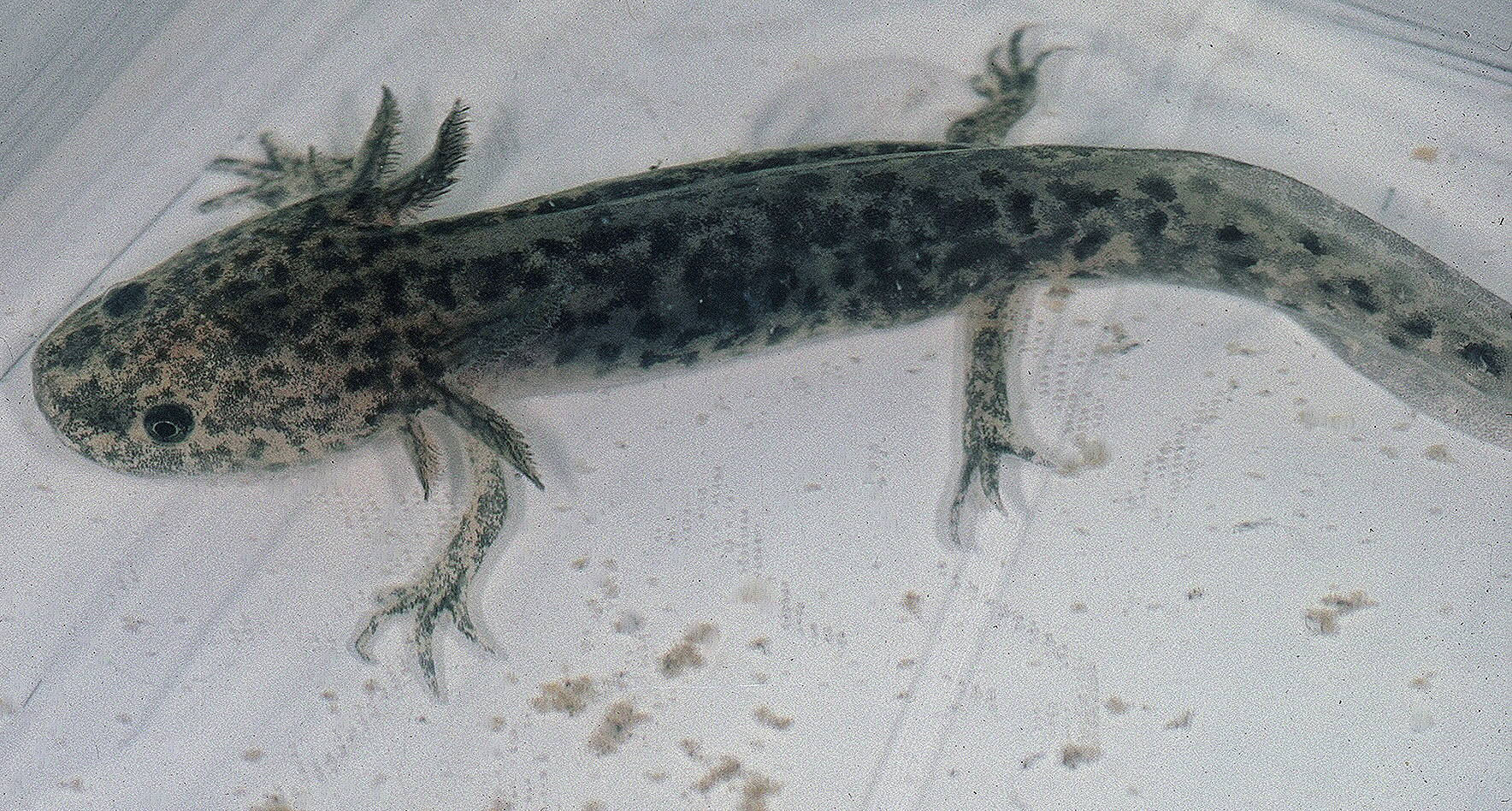
The Mexican axolotl — a dusky amphibian with the remarkable habit of neoteny, or retaining its juvenile body type all its life — once thrived in these canals. Though axolotls have been reproduced widely as lab animals and in the aquarium trade, where they are more often pink or yellow thanks to genetic mutations, it is now questionable whether any significant wild population remains. At last count, a decade ago, there were 35 axolotls per square kilometer in the Xochimilco wetlands, down from thousands in the 1990s. Pollution, urbanization, and introduced fish species have made life nearly impossible for them.
Early in the new millennium, ecologists Luis Zambrano and the Mexican axolotl, a dusky amphibian with the remarkable trait of neoteny—maintaining its juvenile body type throughout its life—were formerly housed in these waterways. The existence of a significant natural population of axolotls is currently in question, even though they have been widely bred as lab animals for the aquarium trade, where genetic modifications have caused them to become more often pink or yellow. Ten years ago, there were 35 axolotls per square kilometer in the Xochimilco wetlands, down from thousands in the 1990s. Their lives have become nearly impossible because of pollution, urbanization, and alien fish species. At the National Autonomous University of Mexico, or UNAM, he was asked to survey axolotls by the government while he was researching the effects of invasive carp. Following several decades of consistent environmental deterioration in Xochimilco, Mexico was interested in determining the number of axolotls that survived in their last bastion. Axolotls were a staple of the traditional cuisine and cosmology of the area, and they held great cultural significance. Axolotls have been employed by laboratory biologists worldwide for over a century to investigate tissue regeneration. However, these biologists were concerned that their animals were becoming inbred because there was no wild population from which to deduce fresh bloodlines.
Being an ecologist, Zambrano would never consider a rescue plan for the axolotl that did not include reclaiming its natural habitat. He clarified, though, that “this isn’t the middle of Borneo or the great plains of the Serengeti.” Mexico City, with a population of 22 million and still rising, served as the habitat. There were an incredible number of things working against you.
Chinampas in Xochimilco before dawn. An old marsh farming system dating back to the 10th century once generously provided the Mexican axolotl, Ambystoma mexicanum, with a haven.
Xochimilco native Juan Carlos Domínguez wears an axolotl jersey to a cyclists’ protest against a highway overpass; an albino axolotl at a tourist spot where captive axolotls are shown; a painting in Xochimilco portrays the shape-shifting Nahua god Xolotl, who would take the form of the frog.
The springs that had supplied water to the Xochimilco wetlands were long since diverted for municipal use, and treated wastewater took their place. Introduced carp and tilapia ate axolotl eggs. Southward development was driven by new roadways, endangering the last pockets of a distinct pre-Columbian farming culture whose canals had provided over a millennium of refuge for axolotls. Party boats not only increased pollution and noise levels, but they also encouraged farmers to turn their chinampas into eateries, pubs, and soccer fields, and to dry up minor canals.
Axolotls are depicted in many places across Mexico City, including handicrafts, street paintings, and recently, a 50 peso currency. However, nothing is known about the animal’s natural past. Tank specimens have provided us with almost all of the knowledge about axolotls.
Dr. Zambrano and his associates came to the conclusion that the best way to preserve and research the wild axolotl was to encourage the revival of traditional agricultural methods and then turn some of the farmers’ canals into axolotl sanctuaries in the hopes that, eventually, they could be connected. Dr. Zambrano and his associates have been writing extensively on the theory and practice of this method for over ten years. Their efforts are now supported by a major conservation body, but some of their colleagues and axolotl specialists consider them to be borderline utopian.
Dr. Zambrano and his colleagues have now released a limited number of animals to test their theories. Twelve, precisely.