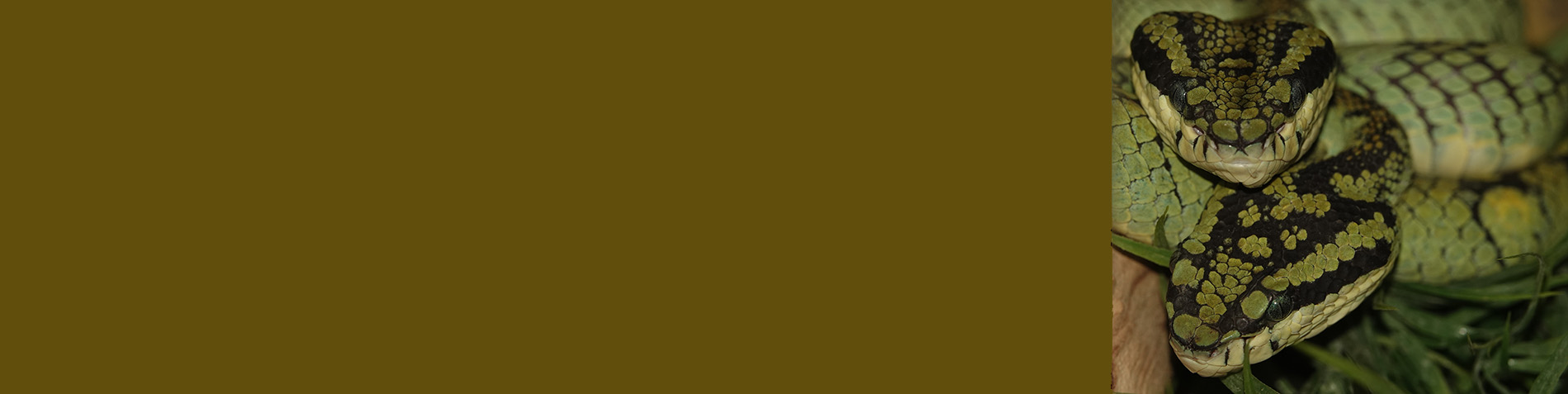


The Green Rat Snake, Senticolis triaspis, is a widespread polytypic colubrid snake that ranges from the southwestern United States southward along the Pacific Coast and part of the Atlantic Coast of Mexico to Costa Rica. Three subspecies have been described based on differences in color pattern and scutellation: S. t. intermedia, S. t. mutabilis, and S. t. triaspis. The last taxonomic revision was completed in 1960. In a new paper Roth-Monzon et al. present an integrative taxonomic analysis of geographic variation using multiple sources of evidence: mitochondrial DNA (817 bp ND4 from 62 samples), traditional morphology (meristic and mensural characters), geometric morphometrics of head shape, and bioclimatic estimates of environmental niche similarity. Molecular data revealed two deeply divergent mitochondrial lineages corresponding to northern and southern clades and eight well-supported clades within these two main groups. Head shape and niche models also suggest north–south differences, while traditional morphological analyses did not discriminate among mtDNA lineages. Thus, the new study suggests at least two candidate species within Senticolis triaspis based on the mtDNA divergence, differences in head shape, and non-overlapping ecological niches. However, the authors refrain from making taxonomic recommendations pending the addition of nuclear DNA sequence data, finer sampling at contact zones, and additional morphological data; these data are warranted to provide a more robust, stable species delimitation.
Citation
Roth-Monzón, A.J., Devitt, T.J., Ríos-Muñoz, C.A., Parra-Olea, G., Campbell, J.A. and Flores-Villela, O., 2021. Geographic Variation in the Green Rat Snake Senticolis triaspis (Squamata: Colubridae): Evidence from Mitochondrial DNA, Morphology, and Niche Modeling. Ichthyology & Herpetology, 109(4), pp.1026-1035.


