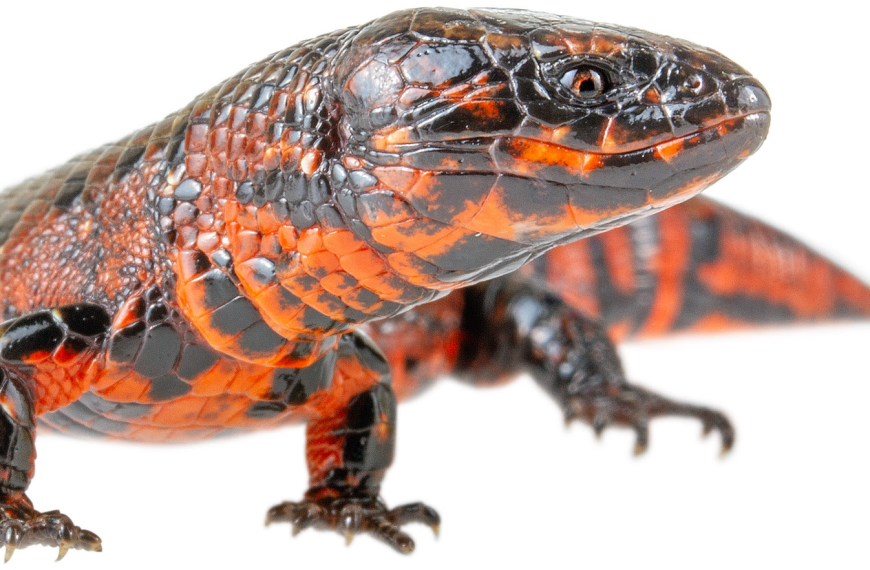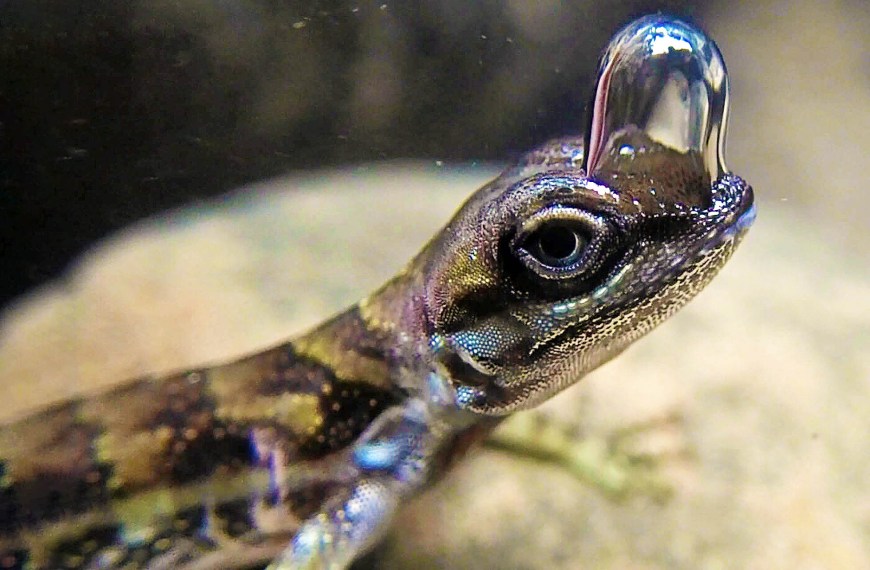


Geckos and skinks are lizard lineages that have been remarkably successful, as measured by the number of species recognized as well as , the size of their geographic range, the variety of habitats, ecological niches, and the diversity of their morphological and life-history features. The range, ecology, morphology, and life history of the varied lineage of terrestrial vertebrates known as skinks were reviewed by Chapple et al. (2023). Essential characteristics of skinks and non-scincid lizards were compared between the three skink subfamilies. Skinks comprise 24% of the world’s lizard variety, with 1743 species currently known to science. Since 2010, skinks have been mentioned in 16% of lizard descriptions. The centers of skink diversity are in central Africa, Madagascar, Australia, New Guinea, southeast Asia, and Oceania. They found skinks have greater distributional ranges but smaller bodies than non-scincid lizards. Skinks rarely exhibit sexual size dimorphism. Compared to only 3% of non-scincid lizards, about a quarter of skinks show signs of limb reduction or loss. Compared to non-scincids (13 percent of species), skinks are more likely to be viviparous and have larger clutch or litter sizes. Skinks are similar in longevity to other lizard taxa but mature later than non-scincids. Skinks are more likely to be carnivorous than non-scincids, with 88% of them being active foragers. Skinks have lower field body temperatures than non-scincid lizards, although they are more likely to be diurnal or cathemeral (feed day and night) than other lizard groups. The ability of skinks to consistently deviate from their body plan and modify their ecology and life history (such as repetitive limb reduction and loss and transitions to viviparity) to suit the environment appears to be a contributing factor in their success.
The study indicates that skinks are, on the one hand, uniform—exhibiting an excellent propensity for small body size (and being sexually monomorphic in body size), diurnal, active foraging, and carnivory. Despite this tendency for uniformity, skinks display evolutionary transitions in limb reduction and the evolution of viviparity. As a lineage, skinks appear to be evolutionarily ‘malleable’, filling every available ecological niche by staying as close as possible to their standard body plan and ecology (which appears to be a good design that works most times) or evolving rapidly in different directions to exploit extreme environments—that is limb reduction and loss in fossorial environments, and viviparity in cold climates. Thus, skinks appear to be the ‘jack of all trades’ of squamates, while retaining the potential to change in certain situations and environments.
Citation.
Chapple DG, Slavenko A, Tingley R, Farquhar JE, Camaiti M, Roll U, Meiri S. 2023. Built for success: Distribution, morphology, ecology, and life history of the world’s skinks. Ecology and Evolution, 13(12):e10791.