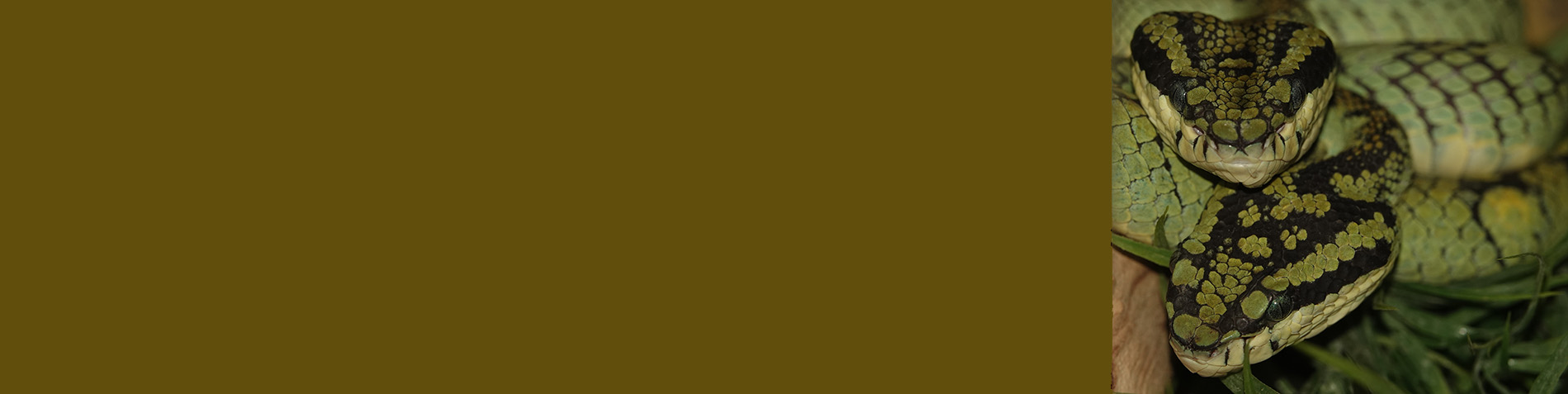


Urbanization changes landscapes, often simplifying and homogenizing natural ecosystems while introducing novel environments. Although this transformation often adversely impacts native wildlife, generalist species that exhibit broad dietary and habitat requirements can persist and exploit urban environments. To understand which life history traits most influence the occurrence of a diverse snake assemblage in an urban environment, Lettfoort et al. (2023) leveraged a dataset of 5102 detection records for 12 snake species in the tropical city of Darwin, Australia. By building ecological niche models, calculating urban niche hypervolume, and compiling life history data, they analyzed the diversity of environments occupied by each species and determined which landscape components were most associated with occurrence data. In keeping with the hypothesis that generalist species would be more successful, the authors found that species with broader habitat and dietary preferences, as well as a penchant for arboreality, were associated with larger urban niche hypervolumes and more frequent human–snake interactions. Additionally, they found that colubrid snakes had significantly larger urban niche hypervolumes than elapid species. These findings contribute to understanding how life history traits aid wildlife persistence in and adaptation to urban ecosystems and have implications for landscape design and conservation management.
Citation
Lettoof, D.C., Parkin, T., Jolly, C.J. et al. 2023. Snake life history traits and their association with urban habitat use in a tropical city. Urban Ecosystems. https://doi.org/10.1007/s11252-023-01327-x


