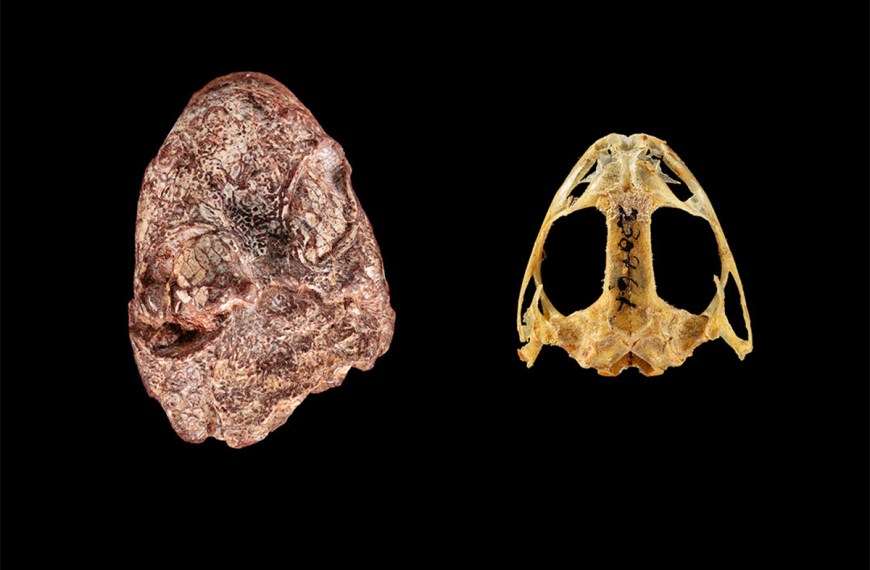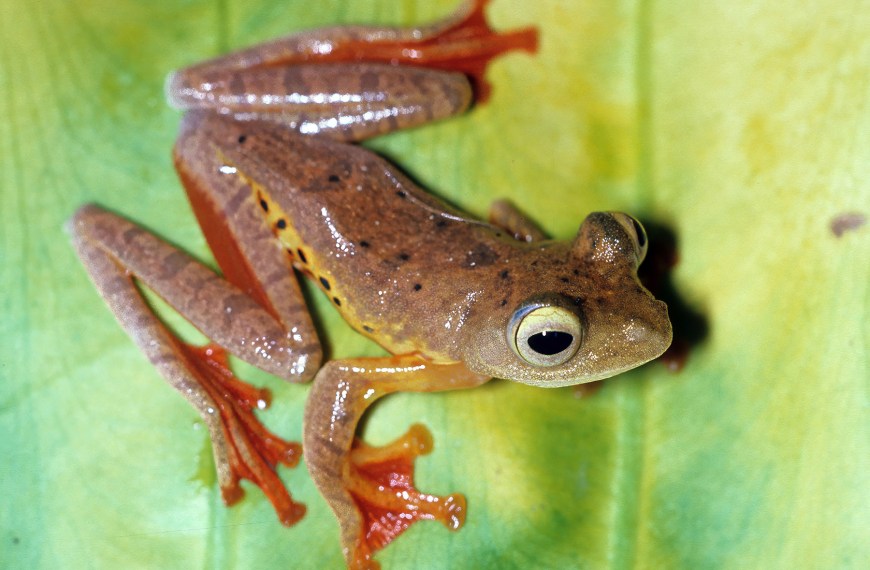

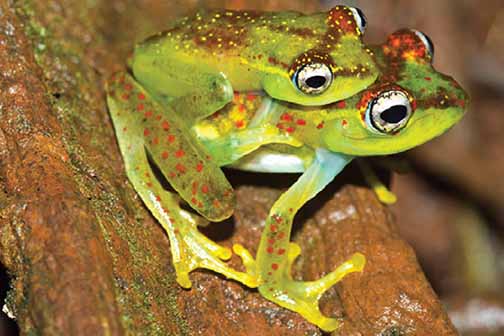

Madagascar has been isolated from mainland Africa and Asia for more than 80 million years and has developed a distinctive flora and fauna, with more than 90% of its species endemic to the island nation. It is also home to the Malagasy people, with a population of about 30 million, and was first colonized by humans around the first century BCE. The island’s biodiverse wildlife is highly threatened, and much of its human population lives below the poverty line. In Reviews, Antonelli et al. and Ralimanana et al. characterize the biological history and diversity of the island and examine the conservation status and actions required to protect biodiversity and improve living standards and well-being for the Malagasy people.
Madagascar’s unique biota is heavily affected by human activity and is under intense threat. Here, Antonelli et al. (2022) review the current state of knowledge on the conservation status of Madagascar’s terrestrial and freshwater biodiversity by presenting data and analyses on documented and predicted species-level conservation statuses, the most prevalent and relevant threats, ex situ collections and programs, and the coverage and comprehensiveness of protected areas. The existing terrestrial protected area network in Madagascar covers 10.4% of its land area and includes at least part of the range of the majority of described native species of vertebrates with known distributions (97.1% of freshwater fishes, amphibians, reptiles, birds, and mammals combined) and plants (67.7%). The overall figures are higher for threatened species (97.7% of threatened vertebrates and 79.6% of threatened plants occurring within at least one protected area). International Union for Conservation of Nature (IUCN) Red List assessments and Bayesian neural network analyses for plants identify overexploitation of biological resources and unsustainable agriculture as the most prominent threats to biodiversity. Antonelli et al. (2022) highlight five opportunities for action at multiple levels to ensure that conservation and ecological restoration objectives, programs, and activities take account of complex underlying and interacting factors and produce tangible benefits for the biodiversity and people of Madagascar.
The alarming status of Madagascar’s biodiversity is the result of multifaceted, unsustainable practices that include historic and contemporary exploitation. In the eyes of much of the world, Madagascar’s biodiversity is a unique global asset that needs saving; in the daily lives of many of the Malagasy people, it is a rapidly diminishing source of the most basic needs for subsistence. Achieving a sustainable future that benefits people and biodiversity is possible by building on and expanding integrated, inclusive conservation efforts. Biodiversity is the greatest opportunity and the most valuable asset for Madagascar’s future development.
Citation
A. Antonelli, R. J. Smith, A. L. Perrigo, A. Crottini, J. Hackel, W. Testo, H. Farooq, M. F. Torres Jiménez, N. Andela, T. Andermann, A. M. Andriamanohera, S. Andriambololonera, S. P. Bachman, C. D. Bacon, W. J. Baker, F. Belluardo, C. Birkinshaw, J. S. Borrell, S. Cable, N. A. Canales, J. D. Carrillo, R. Clegg, C. Clubbe, R. S. C. Cooke, G. Damasco, S. Dhanda, D. Edler, S. Faurby, P. de Lima Ferreira, B. L. Fisher, F. Forest, L. M. Gardiner, S. M. Goodman, O. M. Grace, T. B. Guedes, M. C. Henniges, R. Hill, C. E. R. Lehmann, P. P. LowryII, L. Marline, P. Matos-Maraví, J. Moat, B. Neves, M. G. C. Nogueira, R. E. Onstein, A. S. T. Papadopulos, O. A. Perez-Escobar, L. N. Phelps, P. B. Phillipson, S. Pironon, N. A. S. Przelomska, M. Rabarimanarivo, D. Rabehevitra, J. Raharimampionona, M. T. Rajaonah, F. Rajaonary, L. R. Rajaovelona, M. Rakotoarinivo, A. A. Rakotoarisoa, S. E. Rakotoarisoa, H. N. Rakotomalala, F. Rakotonasolo, B. A. Ralaiveloarisoa, M. Ramirez-Herranz, J. E. N. Randriamamonjy, T. Randriamboavonjy, V. Randrianasolo, A. Rasolohery, A. N. Ratsifandrihamanana, N. Ravololomanana, V. Razafiniary, H. Razanajatovo, E. Razanatsoa, M. Rivers, F. Sayol, D. Silvestro, M. S. Vorontsova, K. Walker, B. E. Walker, P. Wilkin, J. Williams, T. Ziegler, A. Zizka, H. Ralimanana, Madagascar’s extraordinary biodiversity: Evolution, distribution, and use. Science378, eabf0869 (2022).