

Planning for conservation requires accurate estimates of tropical extinction rates to assess the effects of human activity on biodiversity. Despite losing most of its tropical primary forest since 1819, Singapore has an incredibly detailed biodiversity record. Chisholm et al. (2023) assembled the largest database of biodiversity records for Singapore to date, containing over 50,000 individual records, over 3,000 species, and ten major taxonomic groups. They then used statistical techniques to estimate extinctions, considering “dark extinctions,” or the extinction of undiscovered species. Even though extinctions were concentrated among larger, more captivating species, Singapore’s estimated overall extinction rate was 37%, which was two times lower than earlier projections. Based on extrapolations, it is predicted that by 2100, Southeast Asia will resemble a “tropical Europe,” with about 80% of the original species continuing to exist in environments controlled by humans. Accurate data on how deforestation affects tropical biodiversity is desperately needed. With records dating back to the turn of the 19th century, the city-state of Singapore possesses one of the most comprehensive biodiversity databases in the tropics.
Primary forest covered almost all of Singapore in 1819 but has since been destroyed in considerable parts. The research team collected over 200 years of data for ten key taxonomic groupings in Singapore (>50,000 individual records; >3,000 species). They predicted extinction rates using new and recently established statistical models that consider “dark extinctions” or the extinction of undiscovered species. Thirty-seven percent was the anticipated total extinction rate (95 percent CI [31 to 42 percent]). By extrapolating observations from Singapore to a future scenario of business as usual for deforestation in Southeast Asia, we find that by 2100, 18% (95 percent CI [16 to 22 percent]) of the region’s species will be lost. Our estimates of extinction for Southeast Asia and Singapore are two times lower than earlier estimates that also tried to consider dark extinctions. However, the authors warn that some populations are disproportionately susceptible, including large mammals, birds that depend on forests, orchids, and butterflies.
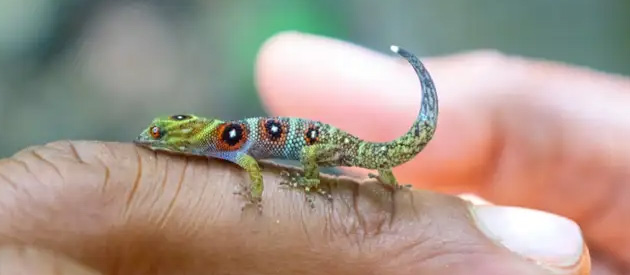
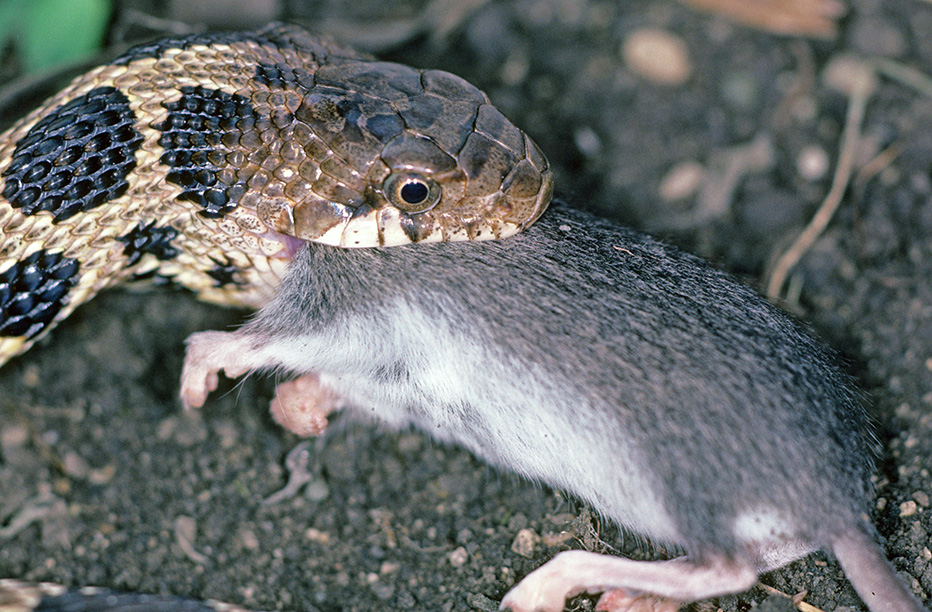
Reptiles in Singapore mostly belong to the order Squamata (lizards and snakes), but there are at least six turtles and at least one representative of Crocodilia. The earliest reptile records in Singapore originate from the mid-19th century. Most species extant today were known by the mid-20th century, though several were discovered in the late 20th and early 21st centuries. Sources used include historical catalogs, books, and journal articles. The researchers excluded marine species (e.g., sea snakes, crocodiles and sea turtles) because it is difficult to define local extinction for such species. Substantial uncertainty surrounds the status of several reptile species in Singapore because of sporadic sighting records. For example, the Selangor Mud Snake (Raclitia indica) had until recently been recorded only once in Singapore, in 1830, but was recorded again in 2020, and so is assessed as extant. They assumed that species not seen since 1988 (30 years before the bulk of data collection) were extinct. Still, the example of the Selangor Mud Snake highlights the possibility that some such species will nevertheless be rediscovered in the future. There is also substantial uncertainty because of the confounding effects of the wildlife trade: several reptile species recorded in Singapore may be escaped pets or animal releases associated with religious practices. For example, the Black Marsh Turtle (Siebenrockiella crassicollis) is native to neighboring countries and has been recorded in Singapore several times since 1978. Still, it was not recorded in Singapore before then, and the animal is frequently released as a religious offering. The species was likely introduced in Singapore and was hence considered non-native. For each species affected by such uncertainty, evidence on geographic range, sighting records, presence in the wildlife trade, and other sources to assess whether the species was native to Singapore and is still present today.
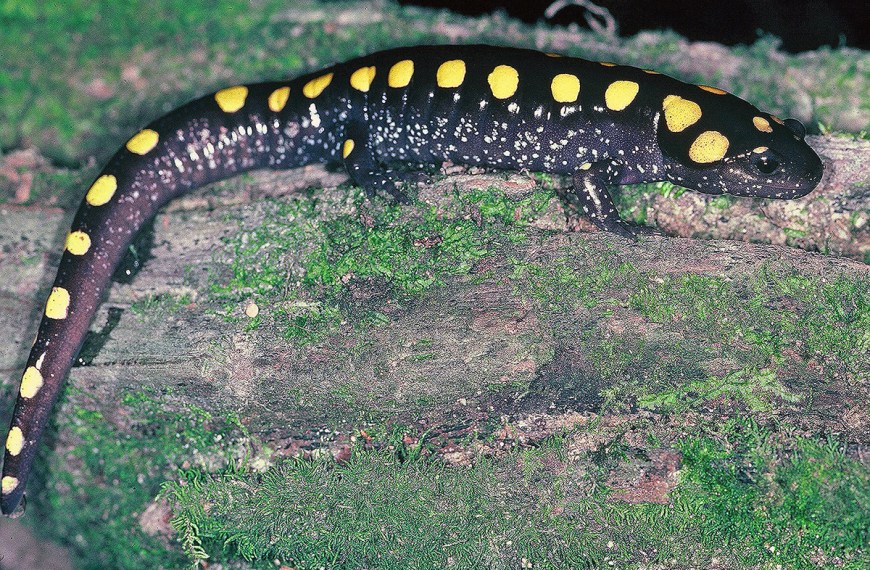
The earliest amphibian records in Singapore originate from the mid-19th century. Most species extant today were known by the mid-20th century, with only a few discoveries from the 1990s to the present. Sources used include historical catalogs, books, and journal articles. They also used records of specimens acquired from online museum databases. For sighting records, verified citizen sightings on iNaturalist (hosted on GBIF) and sightings on social media, such as Flickr and blogs, were also used. Sightings on social media were verified visually using an authoritative guide to several fauna taxa in Singapore. The caecilians in Singapore are subject to taxonomic uncertainty; the species Ichthyophis paucisulcus has been recorded sporadically and is thought to be currently extant, while the species I. singaporensis is a putative endemic Singapore species known from a single specimen from 1847. The putative endemic species is supposed to lack the yellow stripe of I. paucisulcus, but this is not easy to verify from the museum specimen in its current state. Future molecular work could resolve the status of this specimen. They merged these two species into I. paucisulcus in our database. Their final database of amphibians comprised 25 species, all classified as extant. A list of occurrence dates was compiled for each species.
Citation.
Chisholm RA, Kristensen NP, Rheindt FE, Chong KY, Ascher JS, Lim KK, Ng PK, Yeo DC, Meier R, Tan HH, Giam X. Two centuries of biodiversity discovery and loss in Singapore. Proceedings of the National Academy of Sciences. 2023 Dec 19;120(51):e2309034120.