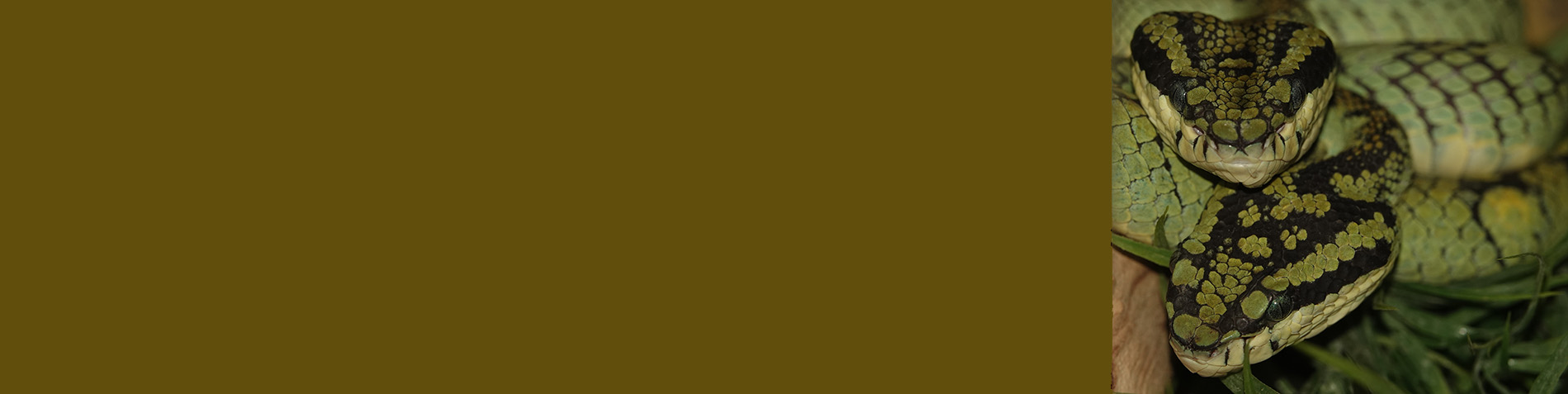


Within the diversity of reptiles and amphibians, a remarkable group of species has evolved a unique adaptation to navigate their forested habitats easily – the ability to glide or parachute from the lofty heights of the forest canopy. These remarkable creatures, which include various species of frogs, salamanders, lizards, and snakes, have evolved specialized anatomical structures and behaviors that allow them to gracefully traverse the air, defying gravity in their pursuit of survival.
The forest canopy, with its dense foliage and intricate network of branches, presents challenges for ground-dwelling organisms seeking to navigate their environment efficiently. However, the canopy becomes their playground and launching pad for these gliding and parachuting species. By harnessing the power of aerodynamics, they have acquired the ability to traverse considerable distances, reach distant food sources, evade predators, and find suitable breeding sites, all while suspended in the air.
The adaptations enabling gliding and parachuting in these creatures vary across different taxonomic groups. Some frogs, for instance, possess extensive webbing between their digits, which acts as a natural parachute, slowing their descent and allowing them to maneuver precisely. Others, like certain species of salamanders, have developed flattened bodies and enlarged ribs that act as wings, creating lift and allowing them to glide over considerable distances. Similarly, lizards have evolved remarkable skin flaps supported by elongated ribs that allow them to glide gracefully between trees. Even some snakes, despite lacking limbs, have developed a specialized ability to flatten their body and undulating movements that allow them to glide from tree to tree or the ground.
This ability to glide or parachute enhances their mobility within the forest canopy and offers these creatures an advantage regarding foraging strategies, territory expansion, and predator avoidance. By taking advantage of their arboreal environment, they have discovered a new dimension of movement that sets them apart from their ground-dwelling counterparts.
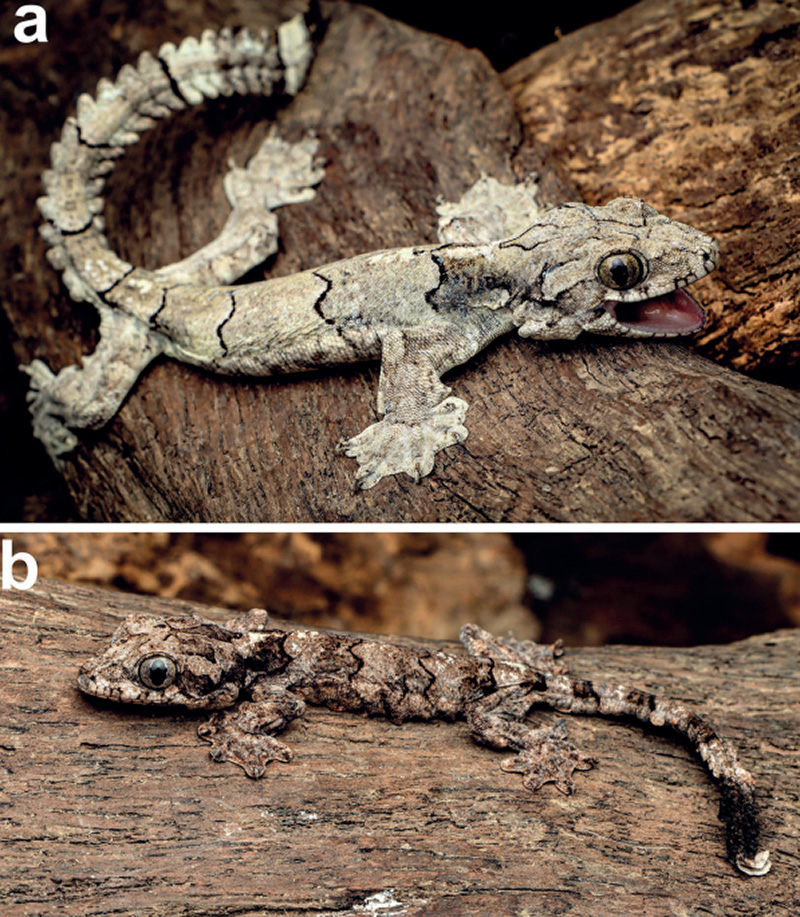
A recent publication by Lalremsanga and colleagues (2023) describes a newly discovered genus Gekko (subgenus Ptychozoon) species. Known as Gekko mizoramensis, this lizard exhibits a scattered distribution throughout Mizoram in northeast India. Interestingly, despite their relatively wide range, Parachute Geckos have been infrequently encountered during regular surveys. This can be attributed to their cryptic coloration and behavior, which also explains the scarcity of specimens and records from most known habitats, particularly in India.
Through molecular phylogenetic analysis utilizing the ND2 gene, the Gekko specimens from Mizoram were identified as belonging to the lionotum group (Grismer et al., 2018, 2019). They were determined to be the sister lineage of G. popaensis with robust support. Comparing the Gekko from Mizoram with G. popaensis, the uncorrected p-distance ranged from 7% to 14%, from 7% to 57% when compared with other members of the subgenus Ptychozoon. In terms of intraspecific genetic divergence, a range of 2% to 5% was observed among two individuals. Notably, the lowest genetic divergence between two species within the subgenus Ptychozoon is 5% (G. lionotum and G. kabkaebin), suggesting that a divergence exceeding 7% is sufficient to classify the population of the Gekko from Mizoram as distinct from G. popaensis.
Citation
Lalremsanga HT, Muansanga L, Vabeiryureilai M, Mirza ZA. 2023. A new species of Parachute Gecko of the subgenus Ptychozoon (Sauria: Gekkonidae: Gekko) from the Indo-Burma region. Salamandra. 59(2):125-35.
