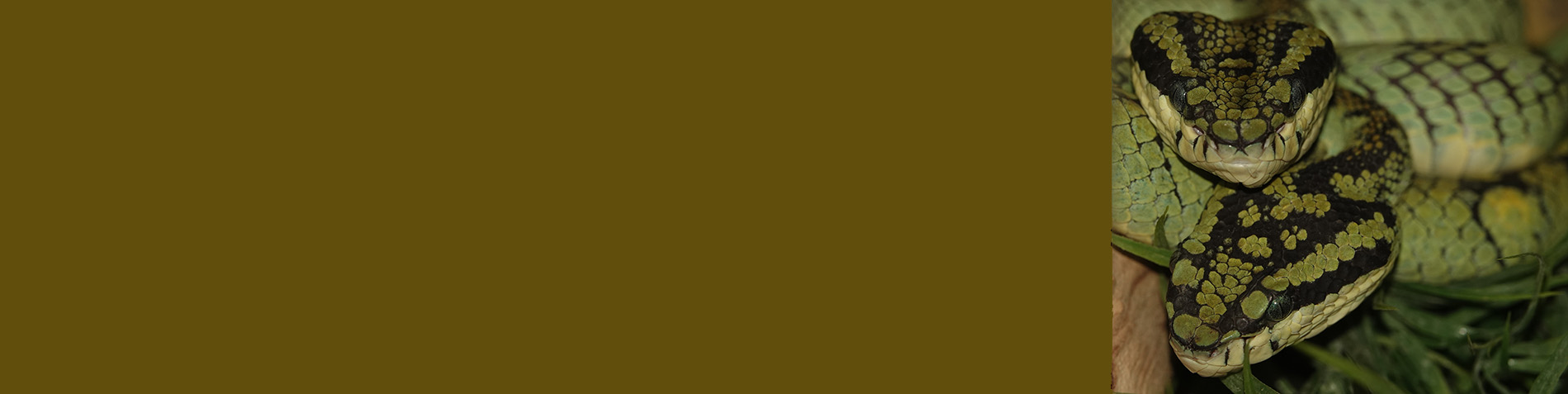


China’s Zisiqiao Village is famous for snake farming. The farms are family owed and combined the village produces about three millon snakes per year. The village was built along a canal about 200 kilometres from Shanghai.
In 1985 Yang Hongchang, introduced snake breeding to the village and residents started selling snakes to vendors. Yang says he first caught wild snakes to cure a serious illness he suffered as a young man. Cobras, vipers and pythons are raised for food and used in traditional medicine, and bringing in millions of dollars to a village that otherwise would rely solely on farming.
Demand for snakes has risen across China, especially since the government began to push for breeding animals used in traditional medicine. The snake meat is sold to restaurants, and other body parts are sold traditional Chinese medicine. But with rising demand for snakes, the once poor village of Zisiqiao is now relatively wealthy, with many residents boasting revenue of tens of thousands of dollars.
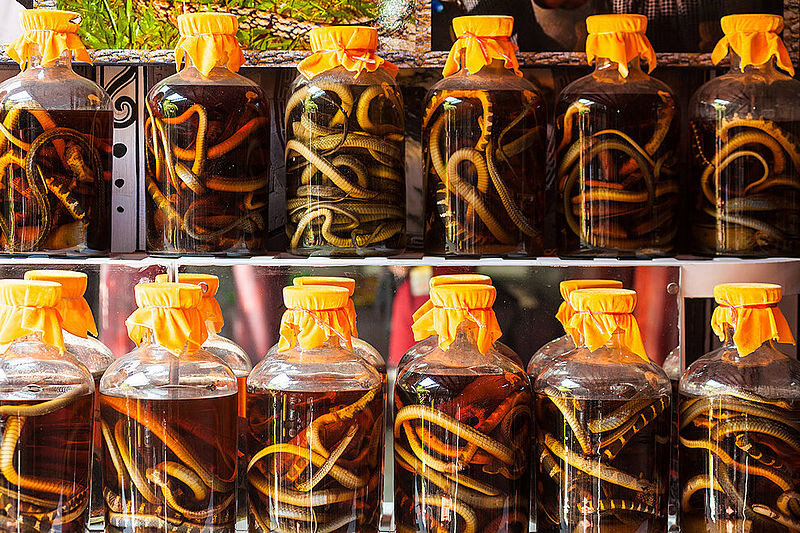
“Domesticating snakes takes experience and technique,” says Mr Yang, who says his business is now a multi-million dollar enterprise. His company carries out research into improving the diet of snakes as well as investigating techniques for incubating eggs, so survival rates will increase. Snakes are renowned for their medicinal properties in Chinese medicine. They are often added to a soup or soaked in wine to boost the patient’s immune system. While most of Yang’s business is done domestically, Mr Yang says he exports his products overseas to Japan and South Korea, as well as Germany and the US.
However the fortunes of the village and Yang Hongchang have changed. China began efforts to curb the coronavirus epidemic in late January of 2020, residents of Zisiqiao have had to come to terms with a ban on wildlife trading, its lifeline for decades. Zisiqiao employed hundreds of people to breed three million snakes a year. Now, the rows of cages that housed the captive reptiles stand empty, and abandoned.
The Chinese character for “snake” has even been removed from the sign on the front wall of a specialty snake meat restaurant on the village’s edge.
“In the village now, there’s definitely no one breeding snakes,” said Yang Heyong, a 71-year old former breeder. “It must be because of the epidemic. Zhong Nanshan (China’s top medical adviser) has already said it is related to bats and snakes!”
Snakes form a large part of the village’s economy, with families keeping them in backyard compounds to sell to restaurants or traditional medicine traders. The global coronavirus pandemic is believed to have originated in exotic animals on sale in the Huanan seafood market in Wuhan. The broad consensus suggests SARS-CoV-2 originated in bats, and early research suggested it reached humans via snakes, but many the pangolin – also on sale in the Wuhan market – are a more likely vector.
China issued a temporary ban on the trade and consumption of wildlife on Jan. 23 and vowed to amend animal protection and epidemic prevention legislation to make that ban permanent. Thirteen provinces have implemented their own local regulations to ban wildlife consumption.
Snake breeding permits were cancelled in January. Winter is the off-season and breeding normally begins in April or May, so the economic impact hasn’t yet hit home.
While some residents said they expected restrictions to be relaxed once the crisis ends, government officials insisted they were permanent, and even if new licenses are issued later this year, the criteria will be far stricter.
“At the end of the epidemic, it still won’t be permitted,” said Lu Jinliang, vice-chief of the local village Communist Party. “They will have to switch professions, raise other species.”
The snake trade was under scrutiny prior to the outbreak. A study by Wuhan University published last December looked at snakes collected from the city’s seafood markets, including the one blamed for the coronavirus pandemic. China trades 7,000-9,000 tons of snake a year, and intensive farming may have enhanced the transmission of parasites and other infectious diseases, the study said.
However, Yu Xuejie, professor of the School of Health Sciences at Wuhan University and one of the study’s authors, told Reuters that he did not believe snakes were the origin of the coronavirus.
Another paper published last month said that while the virus originated in bats, genetic evidence suggests snakes may have been the intermediary species. However, its findings have been disputed, said Patrick Aust, research associate with the Department of Zoology at the University of Oxford. “The source is most likely mammalian, probably bats but other suspects too, including pangolins,” he told Reuters, adding that there was no reason for snakes to be singled out as a health risk.
Animal welfare organizations have welcomed China’s wildlife ban, including the snake farming restrictions, and are urging the government to make it permanent. But no species should be singled out for blame, they said. “This is a disease issue: it is not just one animal’s problem or responsibility,” said Aili Kang, executive director of the Asia Program of the Wildlife Conservation Society, a non-government organization
The impact on the ban of raising snakes for food and traditional medicines may make many people happy – however, the downside is sure to be more snakes will be taken out of the wild. Consider the following.
The number of snakes consumed by the Chinese is staggering. Snakes are used for food, pets, specimens, leather, traditional Chinese medicine (TCM), and are a source of ingredients for cosmetics. Zhou and Jiang (2005) of the Chinese Academy of Sciences examined the species involved in the trade and summarized some of the statistics previously published in Chinese. They found reports that estimate 0.8 to 1.0 million snake heads are harvested each year in northeastern China and estimate that 10 to 15 years of hunting prohibition is needed for populations to recover to pre-1985 levels.

In the Pearl River port of Guangzhou in Guangdong Province, 1.4×10⁷ kg of snakes are consumed. In case you missed it, that’s 14 million kilograms, or 30.8 million pounds, of snakes. Between 1990 and 1995, 13 factories producing TCMs used 1,600 kg of the Chinese Ratsnake (Zaocys dhumnades), 234 kg of the Chinese Moccasin (Deinagkistrodon acutus), and 20,300 heads and 31.2 kg of the Chinese Banded Krait (Bungarus multicinctus). Another estimate suggested that 9 of the 22 Chinese provinces consumed 7.57 x 10⁶ kg of snakes per annum. The use of snakes in Anhui province increased from 15,000 kg in 1997 to 91,000 kg in 2000. The approximate number of snake heads exported from China in the early 1990’s was estimated to be in the range of 3.0–3.5×10⁶. China has now shifted from being a net exporter of snakes to a net importer of snakes. The country can no longer sustain the use of its native snakes and is now starting to suck-up snakes from the rest of the world. The USA’s part in this is not clear, but between 1998 and 2002 the US exported 72,683 Western Diamondback Rattlesnakes (Crotalus atrox) to be used as food and TCMs by the Chinese. It is important to bear in mind that while the US exported its snakes for food, it also imported Chinese snakes for the production of traditional Chinese medicines
Chinese medicines using snakes are numerous. Here is an example from the TCM Assistant website. Wu Shao She is a medicine that “Expels wind; eliminates accumulations; calms convulsions; …” The drug is “…collected in summer and autumn, cut open in the abdomen.” The drug is, in fact, an almost-complete corpse of the Chinese Ratsnake (Zaocys dhumnades). Of course, there is no evidence that any of these TCMs are able to cure anyone of anything unless of course, it is by way of the placebo effect.
Snakeskins are also important in the exotic leather trade in the US and Europe. The number of these is difficult to calculate, but it could be well into a million skins per year. Snakes that are a meter or less, including the homalopsids, colubrids, and vipers, are often involved at low levels in the trade. However, the snakes that are in demand are the large pythons, particularly the Reticulated Python (Malayopython reticulatus), which is heavily hunted in Indonesia. A recent estimate of the number of giant constricting snakes in legal trade imported into the USA between 1977 and 2007 is estimated at more than 1.1 million individual snakes. Although the trade in Reticulated Python skins has dramatically decreased in the last few years.
References
Erickson A. 2013. A Chinese Town Famous for Its Creepy Snakes. City Lab, 26 Feburary 2013.
Patience M. 2013. Visiting China’s ‘snake village’ of Zisiqiao. BBC, China 5 February.
