

Once again we let Marty Feldner, and his little ringtail, do the talking. I’ll add some comments at the end, and bring out my own rant about this last weekend later in the week.
Marty writes:
With Quailmageddon 2012 upon us the decision was made to track snakes only during the nights of October 5 & 6 instead of during the day when hunters could see where we were hanging flags and, thereby, acquiring a completely different kind of target to kill…not that hunters EVER just shoot something to shoot something. Sometimes they use gas and set fire to those targets. Or use rocks. I’m not at all against hunting; there’s little I like more to eat than game meat and given sufficient freezer space will happily participate in future hunting expeditions. And, yes, I know it is unfair to characterize all hunters as ones with the redneck mentality to kill anything that slithers BUT it makes no sense to take chances given knowledge of past incidences of ignorant and unnecessary snake killings by orange and camo-clad consumers of crappy canned American beer.
Arriving at the site Friday evening Roger and I were pleasantly surprised to find the site devoid of hunters and conditions beautiful for a night’s stroll tracking snakes amongst the saguaros. Enjoying another outstanding sunset while mass signaling from the top of IMH I split from Roger to head after CT13. Due to how close CT13 appeared from her signal strength and how easy she’d be to get Roger was even kind enough to offer to open the data sheet he gave me. What a guy!…but then the tracking took place. She wasn’t far, really, but she was in some of the rockier and more difficult terrain to traverse. No problem, and even though she wasn’t visible, I got to spend more time with my furry tracking buddy. The ringtail showed up as I was changing batteries in the GPS before continuing on my circuitous route that would bring me back to the same general area on IMH to track the last snake of the night, CT12. On to the images which combine both nights of tracking.
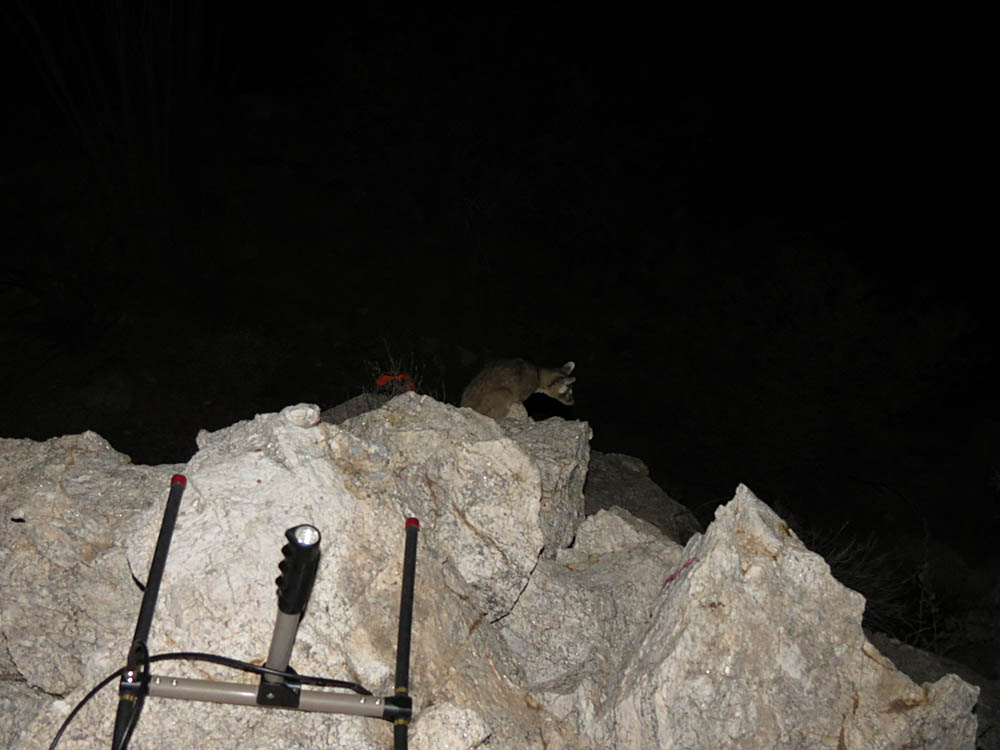
Ringtail1-3 10-5-2012: At this point it wouldn’t surprise me if people were starting to think, “Another damn ringtail report?” Yep, the novelty of one of the coolest nocturnal mammals that can’t eat me has yet to wear off. We hung out for 10-15 minutes before I headed off. During that time, as the first picture indicates where there’s a head peeking out of the space between boulders near my foot, the ringtail was even more comfortable to come near me. As I watched this lithe little mammal I couldn’t help but be impressed with how fluidly and effortlessly it moved over and through the rocks checking out cracks, investigating opening and poking around attendant to its duties as a ringtail. It even stopped moving (second image) and laid down a couple meters from me at the edge of the rock ridge where CT13 resides. The last image shows the ringtail next to CT13’s flag in front of the antenna. The next night the ringtail returned to keep myself and Jon Davis company and investigated the flag, nosing it and pulling at it with its teeth. CT13, again, wasn’t visible and hadn’t moved. The previous week CT13 had been on the E/SE slope of IMH, this week she was on the north slope at the east end of IMH.


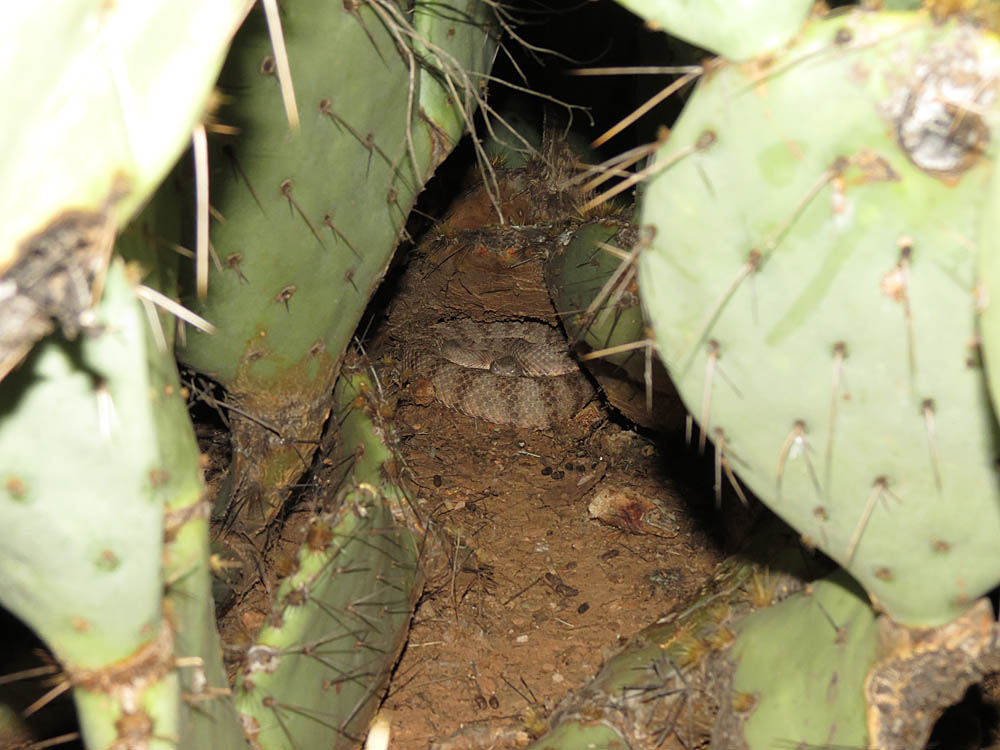
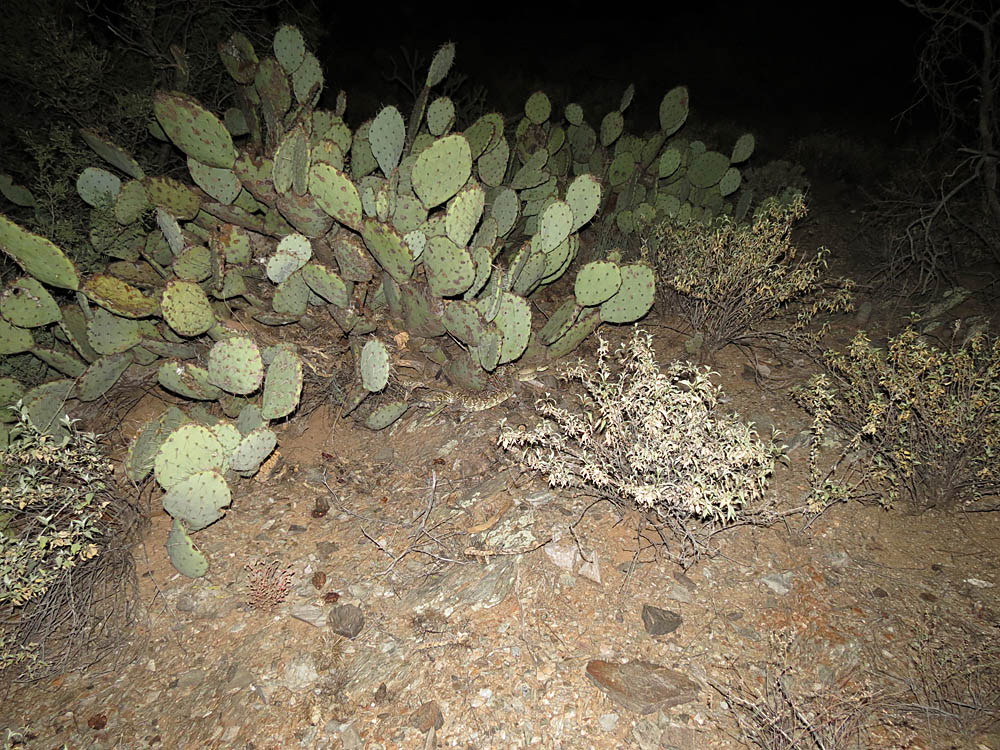
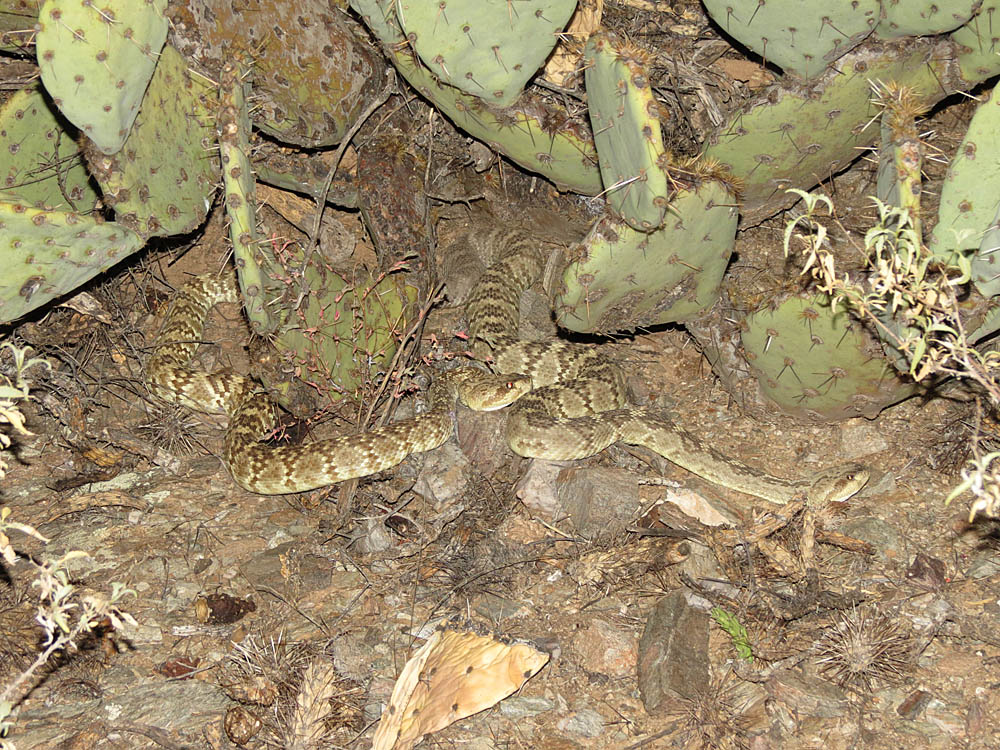
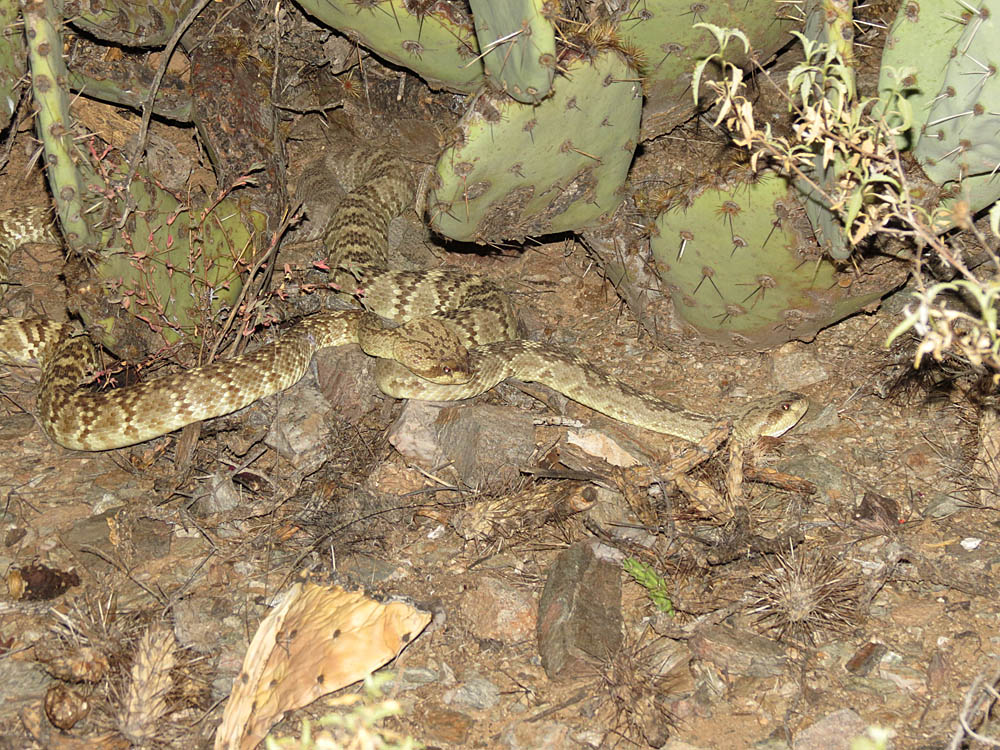

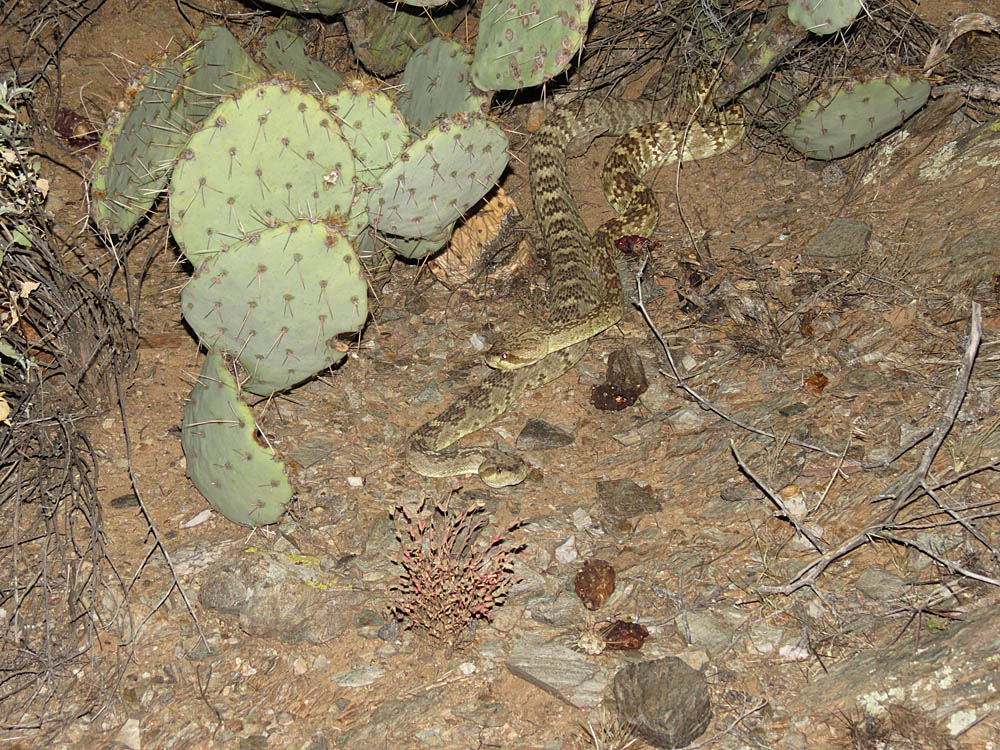


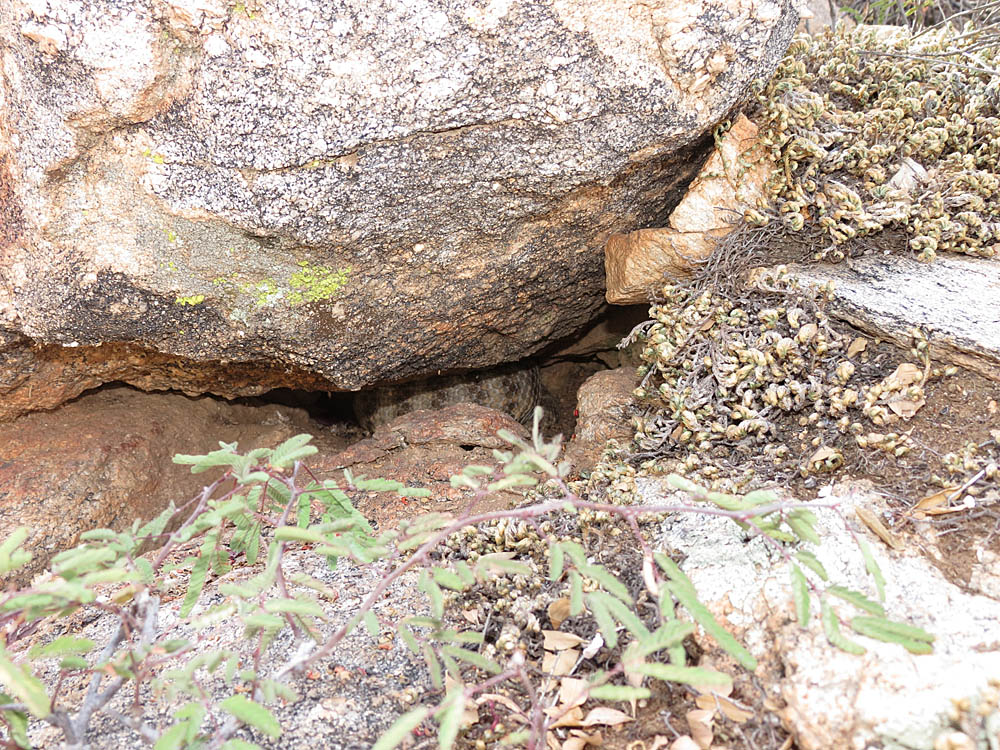
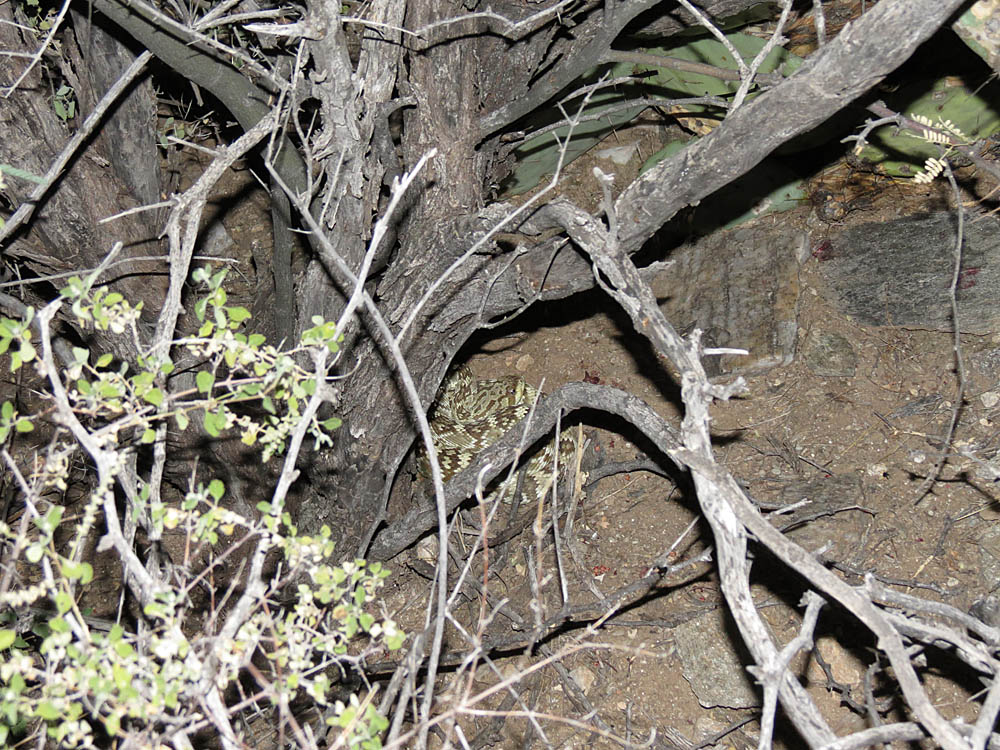
In mid February of 2002, during the pistol/shotgun Javelina hunting season, I was observed by a hunter on a quad while writing up our black-tailed rattlesnake male CM4. The hunter was watching me with his binoculars about 20 meters below me. He eventually buzzed off. The snake was just outside of a den that we call “Jeff’s Den,” which is located on the south ridge of the Suizo Mountains proper. My first impulse was a good one: bag the snake, and bring it back after the hunt. Instead, I left it as it was. The next day, the snake, and the signal, were gone forever. I’ll just stop there, and let that comment ride as a reason for my paranoia when the hunting seasons arrive.
The observation of the black-tails mating is significant in that it is the first time we’ve ever recording it. Back in 2001, we had a female, CM2, who drew in three different males. We at one point saw tails in alignment, but no insertion. That incident was in late September of 2001. The capture of this new female has our hopes up for seeing the other end of the spectrum: birthing in desert black-tails. Things are shaping up nicely for 2013!
It is interesting to note that this mating event in early October is the first time we’ve ever seen any mating of any species of rattlesnake in October–at least on the plot. We have seen countless acts of courtship with atrox–but never mating.
The show will go on!
Best to all, roger