-
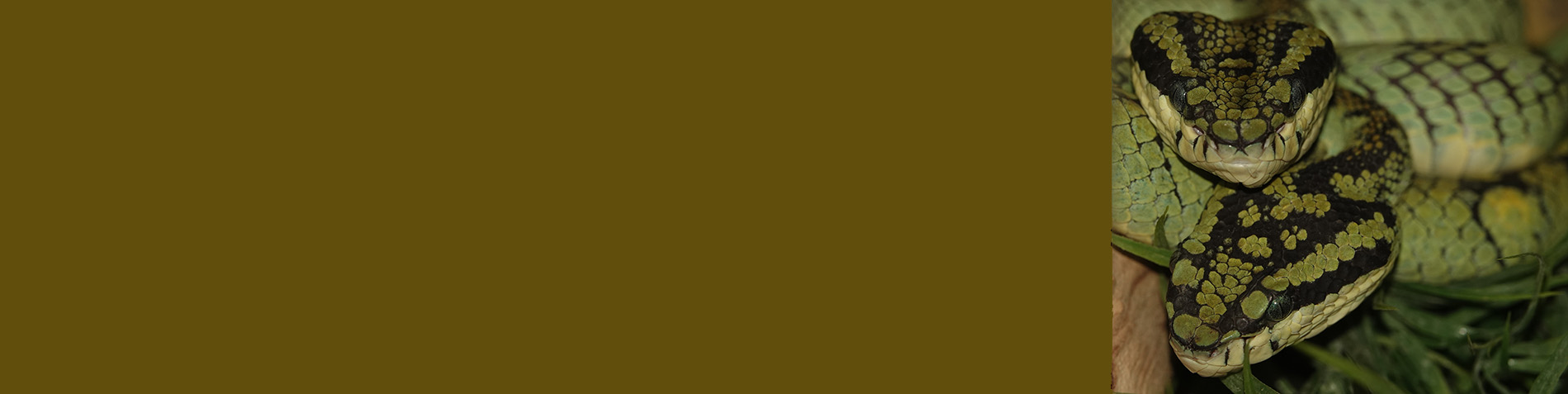
Four new vipers were described in 2016
posted on
Bale Mountains Adder, Bitis harenna Gower et al. 2016 Bale Mountains Adder, Bitis harenna Bale Mountains Adder is similar in scalation to Bitis parviocula. It is known from the holotype and one photograph taken of a specimen that was not collected. It inhabits the Bale Mountains of Ethiopia near the town of Dodola, which is on…
-
Twelve new species of Anolis were described in 2016.
posted on
Anolis is the largest genus of lizards with more than 416 described species. Eight new species were described by Kohler and Hedges (2016) Anolis chlorodius, Hispaniola revising the green anoles of Hispaniola. Using morphological and molecular genetic data the authors recognize 16 species of green anoles on the island, eight of which they describe as new species (A.…
-
Three new turtles described in 2016
posted on
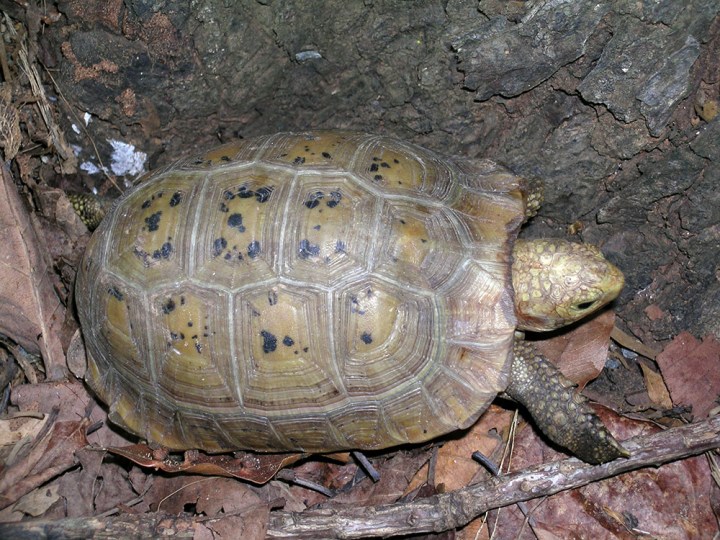
Three new species of turtles were described during 2016. This brings the number of recognized species to 345. All three of the new species have relatively small distributions and are good candidates for threatened status. The Yellow-bellied Snapping Turtle, Elseya flaviventralis Goode’s Thornscrub Tortoise, Gopherus evgoodei The Yellow-bellied Snapping Turtle, Elseya flaviventralis Thomson & Georges, 2016 (family Chelidae), inhabits…
-
Northern Leopard Frog populations in the southwest
posted on
Rana pipiens. JCM In the southwest, the Northern Leopard Frog, Rana (Lithobates) pipiens, is considered a threatened species, Much of this is due to droughts, land development, and falling water tables because of human water needs. Invasive species are a major contributor to loss of biodiversity. However, translocations of a species within its own distribution…
-
A new Tantilla from the dry forests of Peru
posted on
A male Tantilla tjiasmantoi Koch & Veneagas, 2016. Seasonally dry tropical forests have a distinct seasonality with several months of arid-like conditions when many plants lose their leaves. In South America, these forests are discontinuous and can occupy large areas such as the Caatinga in northeastern Brazil or small fragments as being found in inter-Andean valleys…
-
The number of species of birds and what it says about the number of species of reptiles
posted on
This blog usually focuses on non-avian reptiles. However, the research reported here on birds has great implications for how we think about the number of species of reptiles. Birds are the most studied group of vertebrates, reptiles are much less studied. Thus if it is possible to double the number of bird species, the number…
-
Two critically endangered sea snakes Aipysurus foliosquama and Aipysurus apraefrontalis
posted on
This is a photograph of the rare short nosed sea snake discovered on Ningaloo reef, Western Australia.Photo credit: Grant Griffin, W.A. Dept. Parks and Wildlife Scientists from James Cook University have discovered two critically endangered species of sea snakes, previously thought to be extinct, off the coast of Western Australia. It’s the first time the…
-
The human visual system has evolved specifically to detect snakes
posted on
Examples of a Random Image Structure Evolution (RISE) sequence for snake pictures. Participants looked at a sequence of 20 pictures with interpolation ration starting from 95% to 0% with steps of 5%. RISE sequence gradually changes from unorganized to well discernible. Photo credit: Nobuyuki Kawai A Nagoya University research team uses new image processing tool to confirm…
-
The Frilled Lizard and its phylogeography
posted on
A typical defensive display of a Frilled Lizard. The savanna-dwelling Australo-Papuan Frilled Lizards’ spectacular threat display has made the lizard world famous. They are distributed across northern Australia and southern New Guinea. In a recent Molecular Phylogenetics and Evolution article Pepper and colleagues (2017) examine the Frilled Lizard’s phylogeography as it relates to changes in the…
-
Fossil Miocene amphibians and reptiles from Plakias, Crete
posted on
A modern alytid European frog, Bombina. JCM The Neogene (the Miocene and Pliocene) extends from about 22.5 to 2.5 million years ago, and it has been termed “the age of snakes.” The global climate became seasonal, drier and cooler. Polar ice caps formed and thickened, and by the end of the Neogene the first of…
-
Impact of food on an ambush specialist – the Puff Adder
posted on
The puff adder, Bitis arietans. The effect of food availability on the spatial ecology of snakes is under studied. Snake are low-energy specialists, particularly species that specialize in ambush foraging. Ambush specialists can feed infrequently and endure long periods without food. Because they have low-energy requirements, one possible tactic for feeding may be to simply…
-
Galapagos Land Iguana – seed dispersal agent
posted on
A Galápagos Land Iguana (Conolophus subcristatus). Photo credit Traveset et al. The isolation of ocean islands like the Galápagos prevents the arrival of large mammals, which disperse the seeds of many plants by ingesting them. In the absence of mammals, this function is filled by birds, tortoises, lizards and iguanas. To date, no investigation had…

SerpentResearch.Com
Amphibians, Reptiles, & Natural History





You must be logged in to post a comment.