
SerpentResearch.Com
Amphibians, Reptiles, & Natural History
Amphibians, Reptiles, & Natural History

Naturalist, Photographer , Zoologist
After retiring from a career teaching biology and anatomy & physiology and science administration, I study reptiles and amphibians (but focus mostly on squamates). My current interest are in snake phylogeny and diversity, highly aquatic snakes (that are non-sea snakes), the herpetofauna of Trinidad and Tobago, and giant snakes. I have been on the Board of Directors of the Chicago Herpetological Society, the Board of Directors of the Tucson Herpetological Society; a research associate at the Field Museum in Chicago. I have been a member of the International Union for the Conservation of Nature’s (IUCN) Snake Specialists Group International Society for the History and Bibliography of Herpetology (ISHBH); and on the board of directors of Friends of Madera Canyon.
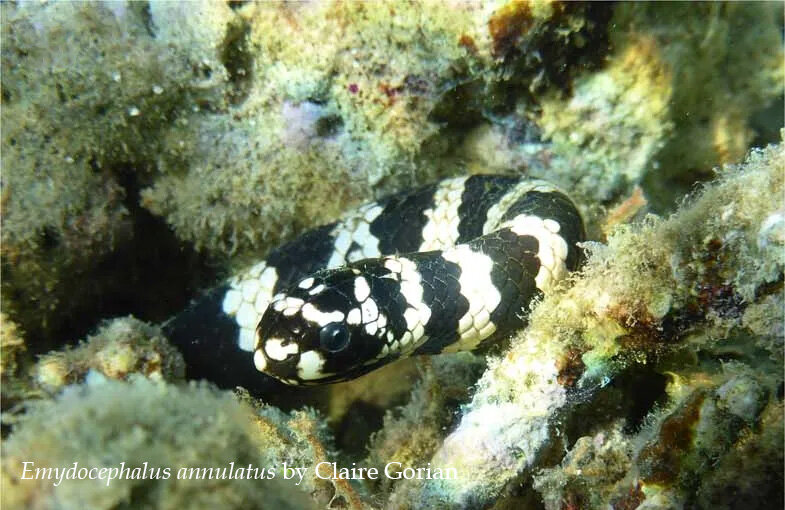
In a new paper, Goiran and Shine (2020) examine female damselfish defending their nests or territories against sea snakes, some of which eat damselfish whereas others do not. They asked the question, can the…

On any given day in the USA, it is possible to find news reports of giant boas or pythons that have escaped from their owners and are roaming the streets large urban areas as…
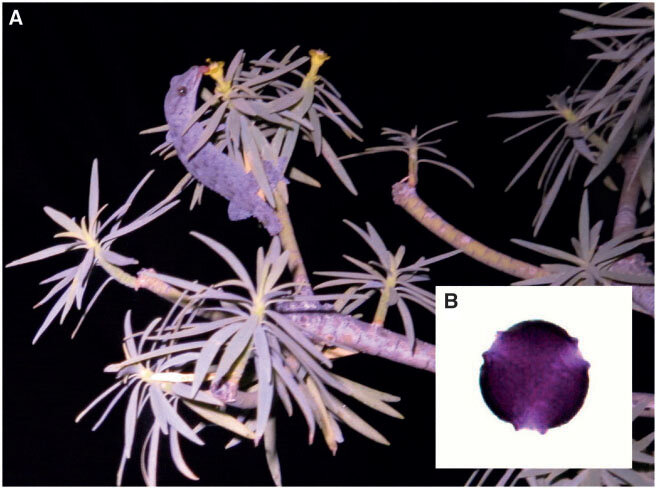
Above. Tarentola delalandii visiting a flowering plant on the island of La Palma (Canary archipelago). (B) Detail of Euphorbia lamarckii pollen grain. I Insects are the best known group of pollinators, but some birds…

The Flower Snake or Moellendorf’s Rat Snake (Family Colubridae) has had a turbulent taxonomic history. The species is endemic to China and Vietnam (Hòa Bình) but it may also occur in Laos. It was…
Well preserved fossil booids from Messel Germany Abstract. Our knowledge of the early evolution of snakes is improving, but all that we can infer about the evolution of modern clades of snakes, such as…
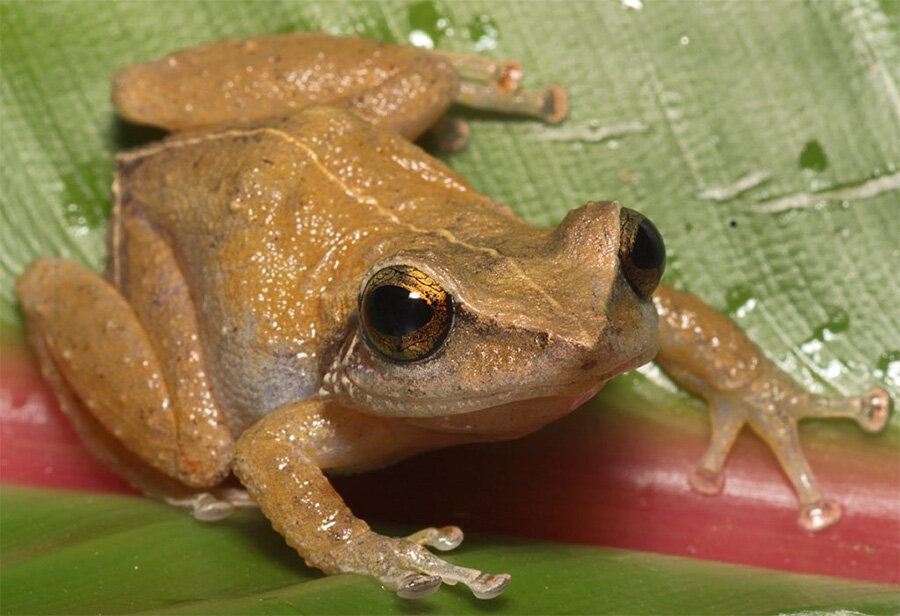
The bright chirp of the coquí frog, the national symbol of Puerto Rico, has likely resounded through Caribbean forests for at least 29 million years. The photo of the coquí above is courtesy of…
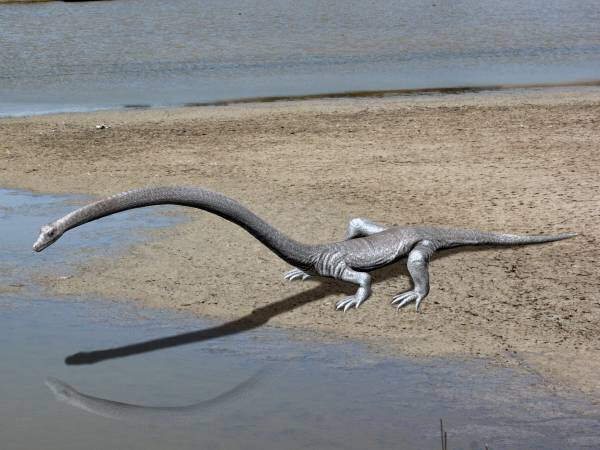
Above is a reconstruction of Tanystropheus longobardicus Tanystropheus was a 6-meter reptile that dated from the Middle Triassic. It is extremely distinctive due to its elongated neck, which measured 3 m long—longer than its body and…

By Alvester Bigol – January 8, 2020New Sarawak TribuneSRI AMAN: A retired Fire and Rescue Department (Bomba) officer and his friends killed a 10m-long (32.9 ft) python weighing 350kg in the forest of Sekupang,…