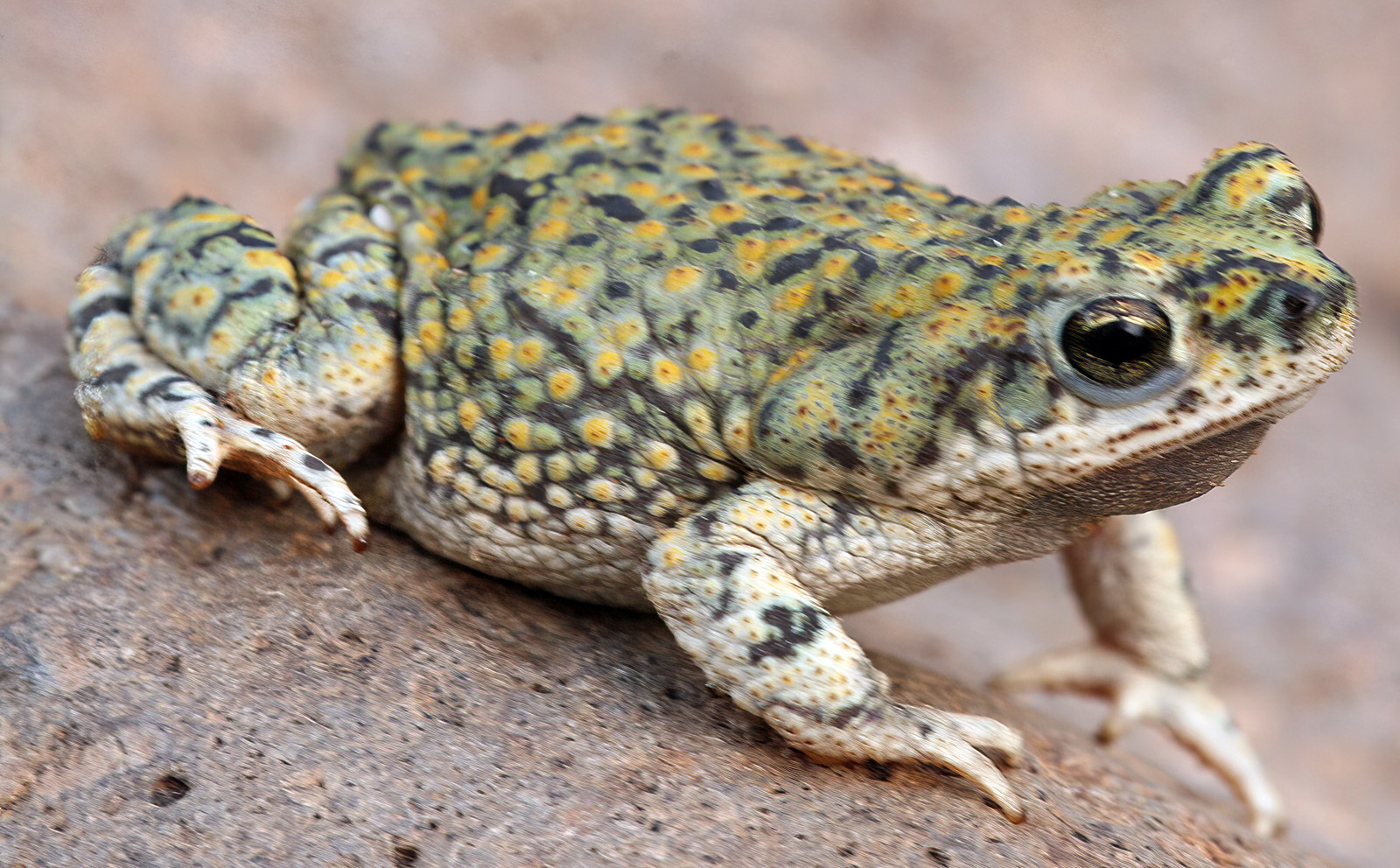
In evolutionary and ecological research across various organisms, the utilization of large-scale, time-calibrated phylogenies derived from supermatrix studies has gained paramount importance. Nonetheless, a notable issue persists with the existing supermatrix-based estimates when it comes to frogs, a subset of anuran amphibians. This predicament arises because these phylogenetic trees rely on a rather limited set of genetic loci, often numbering no more than 15. Consequently, the higher-level relationships inferred from these trees diverge from the more recent phylogenomic estimates based on substantially larger numbers of genetic loci.
In a recent endeavor by Portik et al. (2023), a concerted effort was made to address this issue by constructing an expanded supermatrix and amalgamating it with data obtained from phylogenomic investigations. To streamline the alignment of ribosomal sequences for this enhanced supermatrix, a novel program termed “TaxonomyAlign” was devised, serving as a tool to facilitate taxonomy-guided alignments. The resultant merged dataset encompassed a remarkable 5,242 species of anuran amphibians, incorporating data from 307 genetic markers, albeit with an overall data deficiency of 95%.
Notably, a group of researchers, among whom is Jeff Streicher, Senior Curator in Charge of Amphibians and Reptiles at the Natural History Museum, London, have now unveiled an exceedingly comprehensive evolutionary tree pertaining to frogs, marking it as the most extensive phylogeny of anuran amphibians to date. Drawing on the genetic information from hundreds of markers and an impressive 5,242 frog species, this comprehensive phylogeny promises to revolutionize our understanding of these captivating creatures.
The research paper titled “Frog phylogeny: a time-calibrated, species-level tree based on hundreds of loci and 5,242 species” has been published in the journal Molecular Phylogenetics and Evolution.
This research undertaking has also led to a shift in the inferred initiation date of frog evolution. According to Jeff Streicher, one of the lead authors, the prior assumption was that the diversification into the multitude of species observed today commenced around 210 or 220 million years ago. However, the updated analysis suggests a revised commencement date of approximately 180 million years ago. This revelation indicates that frogs underwent a more rapid diversification into their many species than previously conceived.
Frogs’ diverse natural histories have consistently captivated biologists and nature enthusiasts alike. Yet, past attempts at constructing comprehensive phylogenies for these creatures were hampered by the constraints of the genetic data being employed.
In this study, researchers addressed these limitations by devising an expansive genealogical tree that fused genetic data from phylogenomic studies with numerous genetic markers, encompassing a variety of species. This innovative approach involved data from smaller-scale studies with only one or two markers and larger-scale studies involving fewer species but collectively spanning thousands. This novel methodology included an impressive 5,242 frog species, marking a remarkable 71% increase from prior family trees.
Jeff Streicher emphasizes, “Phylogenetic trees constitute the foundational element for most investigations focused on a particular group of organisms. Consequently, their accuracy and comprehensiveness are of paramount importance.”
Dan Portik, the lead author, adds, “In this study, we have not only expanded the dataset underpinning the frog phylogenetic tree, but we have also introduced new software to enhance the quality of this data.”
The research team developed software to facilitate the comparison of genes that exhibit significant evolutionary divergence between species.
John J. Wiens, the senior author and a Professor at the University of Arizona, affirms, “Prior studies hesitated to combine phylogenomic datasets with numerous markers alongside data from several smaller studies with fewer markers. Our work demonstrates that this is possible and leads to an enhanced family-level tree capable of accommodating thousands of species. This approach holds potential applicability across various groups of organisms.”
This study marks a notable stride forward in our comprehension of frog evolution, offering an invaluable resource for researchers and opening new avenues for exploring anuran amphibians. As the scientific community persists in uncovering the intricacies of these remarkable creatures, this comprehensive phylogeny stands as a cornerstone for forthcoming revelations.
Citation
Daniel M. Portik et al, 2023. Frog phylogeny: A time-calibrated, species-level tree based on hundreds of loci and 5,242 species, Molecular Phylogenetics and Evolution DOI: 10.1016/j.ympev.2023.107907