

FORTHCOMING
Environmental literature often portrays humans as part of nature, implying that everything we do is good and natural. However, this cliche overlooks human dominance and the ongoing struggle against it. The dominant human identity, perceived as entitled and superior, has led to a worldview in which the dominant species controls the planet. Modern technology and innovation have allowed humans to reflect on their uniqueness and expand their capacity to harness and manipulate nature. This narrative of human supremacy has consequences, such as climate change. The dominant human is apart from nature and on a trajectory that is increasingly distant from the natural world. To stop the existential threats, we must unmask the dominant human identity that is destroying the world and transcend it entirely. Placing climate change as “the problem” discourages people from focusing on the mass extinction gathering speed. By protecting the natural world and contracting our impact to align with nature’s recovery, we may open a pathway to becoming part of nature.
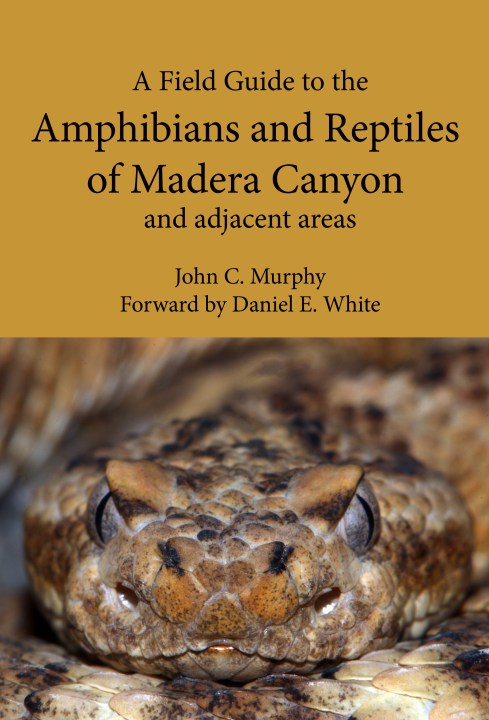
Hundreds of thousands of people visit Madera Canyon, the Santa Rita Mountains, and the Patagonia Mountains each year. Many are local, but others come from other states and countries. Some come for a picnic or hike through the Madrean woodland, but many come to see the Elegant Trogon and the other birds that reach the most northern edge of their distribution in Arizona’s sky islands. Yet others come to see frogs, lizards, and snakes. Alternatively, visitors may come to observe butterflies and dragonflies, as well as to identify other insects or plants. This volume provides species accounts for 16 amphibian species and 71 reptile species that are found or are likely to be found in Madera Canyon, the Santa Rita Experimental Range, the Santa Rita Mountains, the Patagonia Mountains, Canoa Hills, and nearby areas in southeastern Arizona.

John Murphy, and more than a dozen coauthors, 120 photographers from 30 countries came together to create this 712 page book (hardcover and ebook), which covers more than 400 species of aquatic snakes, for the most complete look at the topic to date. From submerged crayfish burrows to coral reefs, snakes have conquered a wide host of aquatic environments, and this book covers (nearly) them all. Among the species included are the elegant sea snakes and sea kraits, gracefully navigating the ocean depths throughout their entire lives. There are also the semi-aquatic snakes, which effortlessly transition between land and water, encompassing diverse groups like boids, pythonids, dipsadids, natrids, viperids, and more. Additionally, the book covers the fascinating aquatic mud snakes, homalopsids, known for their unique adaptations to specific aquatic environments, and of course file snakes, also known as elephant trunk snakes, or the acrochords.
AQUATIC SNAKES DIVERSITY AND NATURAL HISTORY is available exclusively through HCI as a donation thank you gift via digital download. To get your copy of the ebook simply donate a minimum of $20 to the HKV grant using the link below and you’ll be sent directly to the download page. Every copy sold will directly contribute to the conservation and research of imperiled aquatic snakes through the Harold K. Voris Aquatic Snake Research & Conservation Grant. To learn all about the grant, please click here.
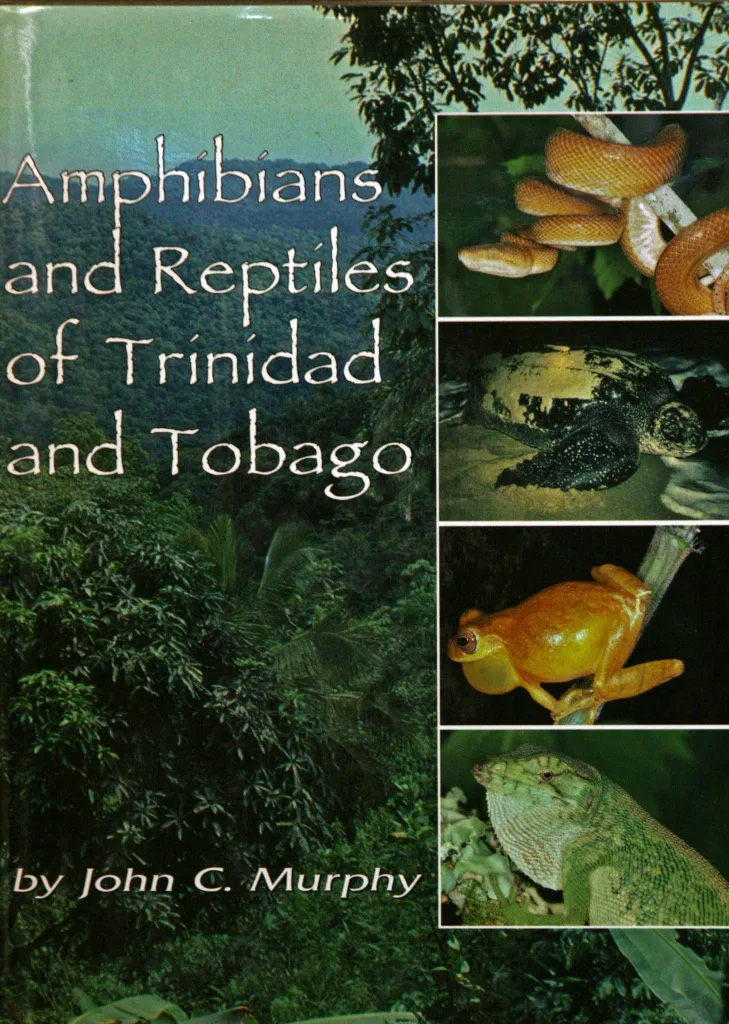
In 1997 this was the only book dealing with the entire herpetofauna of Trinidad and Tobago, covering 130 species and subspecies as well as the environment of the two islands and the natural history of the herpetofauna. The book contains illustrated keys, 111 range maps, 101 line drawings and figures, and 172 color photographs. More than 90% of the forms are illustrated in color. Professional and amateur herpetologists, environmentalists, conservationists, and ecotourists will find this volume useful.
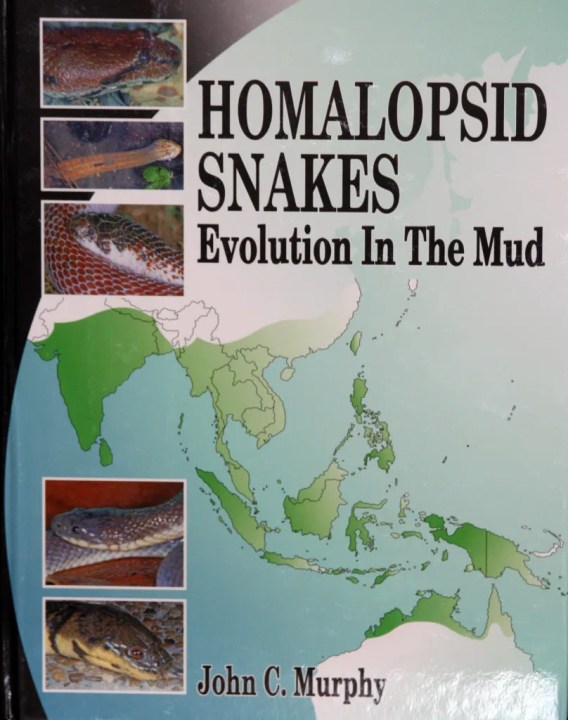
Homalopsid snakes are aquatic rear-fanged snakes that inhabit freshwater, brackish water, and marine environments from Pakistan’s Indus River eastward to Queensland, Australia. While a few live in flowing streams with clear water and rocky bottoms, most live in the muddy habitats created by Himalayan silt flowing to the seas of Southeast Asia. Many feed on fish, but a few have adapted to feeding on crustaceans and some are commensal with crustaceans living in their burrows. The Indochinese Peninsula and Sunda Shelf contain the greatest species diversity, and the history of these snakes is closely tied to the changing landscape of Southeast Asia. Homalopsid Evolution in the Mud is the only available book on these aquatic reptiles and the first comprehensive review of the group in 35 years. It contains species accounts, summaries of the author’s field work, and photographs of the snakes and their morphology which can only be found in this book.
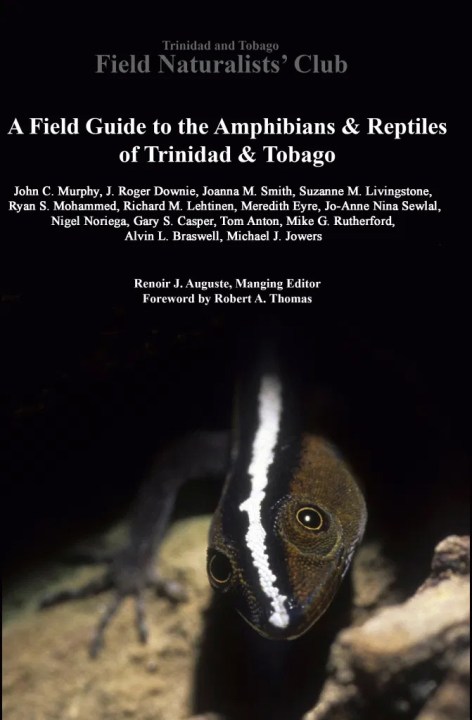
An updated version of the 1997 Trinidad and Tobago book with contributions from many different co-authors.
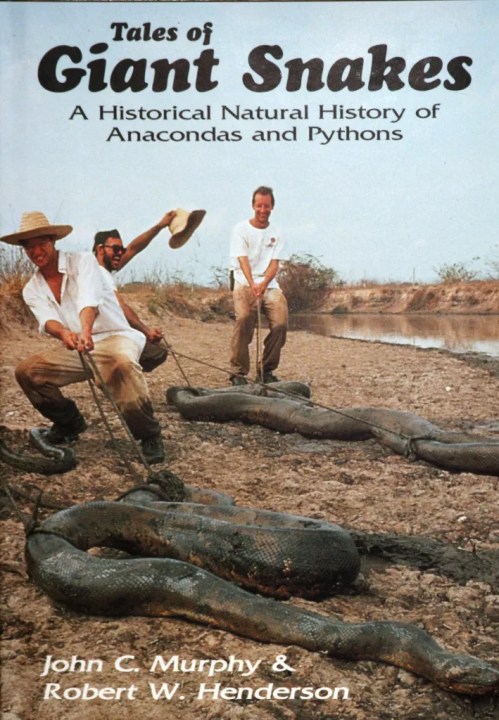
A review of the literature on giant snakes (snakes exceeding 6 meters in total length) that extends back to the 16th century.

A look at snake-avoidance training and how it works.

A look at the natural history of giant and near-giant snakes.





You must be logged in to post a comment.