


John C Murphy and Byamukama Evalist
Natural history, art, and biodiversity conservation have been closely linked in both historical and modern ways. Before photography, natural history art (field sketches, botanical plates, zoological illustrations) was the primary means of recording what species looked like. Many species were first described for science using detailed illustrations in taxonomic works (e.g., birds by John James Audubon, insects by Maria Sibylla Merian, and plants). These images still help scientists today verify old records, track changes in species’ ranges, and understand what has been lost or is at risk.
Natural history art translates technical, often inaccessible scientific information into something visually understandable. Field guides (birds, plants, fish) rely heavily on illustrations to teach identification skills, which are foundational to citizen science and biodiversity monitoring. Clear, accurate images help people recognize species in their local environments, which supports engagement in conservation projects and data collection.
Art can create empathy and a sense of wonder that raw data cannot. Powerful images of rare, beautiful, or threatened species (e.g., polar bears on ice floes, coral reefs, rainforest scenes) help the public feel that biodiversity is worth protecting.
Conservation campaigns and NGOs use illustrations and paintings to shape narratives, posters, exhibits, and educational materials that motivate support and action.
Historic illustrations show what ecosystems and species once looked like: sizes, colors, abundance, even behaviors or seasonal patterns. Comparing older depictions with modern photos or art can highlight changes due to habitat loss, pollution, climate change, or overexploitation. This visual record can be used in research, policy debates, and public education to illustrate decline or recovery.
Natural history art documents biodiversity, makes it visible and understandable, creates emotional and cultural value around species and habitats, and provides a historical baseline for detecting change. All of these roles make it an important tool—and occasionally a catalyst—for biodiversity conservation.
One of us (Byamukama) has been carving sculptures of one of humans’ closest relatives, the Mountain Gorilla, and selling them to tourists. Wood from the macadamia tree (Macadamia integrifolia) is used to carve statues of this great ape. Uganda is rapidly expanding into commercial production of Macadamia integrifolia (the smooth-shelled macadamia nut), making it a lucrative alternative cash crop. The country currently hosts about 2,500 acres of macadamia trees, located in regions of high and moderate elevations and, frost-free climates.

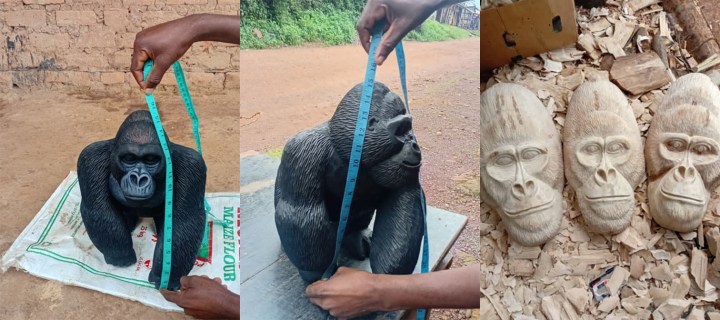
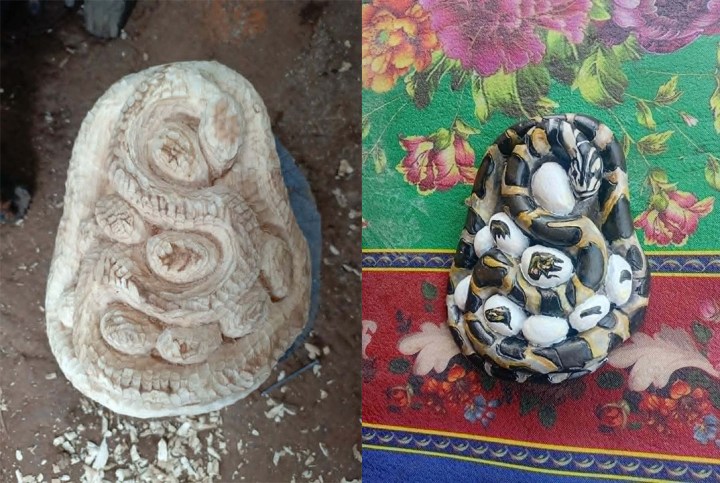
Byamukama has carved gorillas in many sizes, as well as a gorilla mask. I asked him to see what he could do with a female python guarding and incubating her eggs, and he produced the replica shown below. Keep in mind this was his first attempt with a snake.

If you are interested in his carvings his email and phone number are below.
Contact information for Byamukama Evalist
My WhatsApp number +256776954013
email: byamukamaevalist84@gmail.com
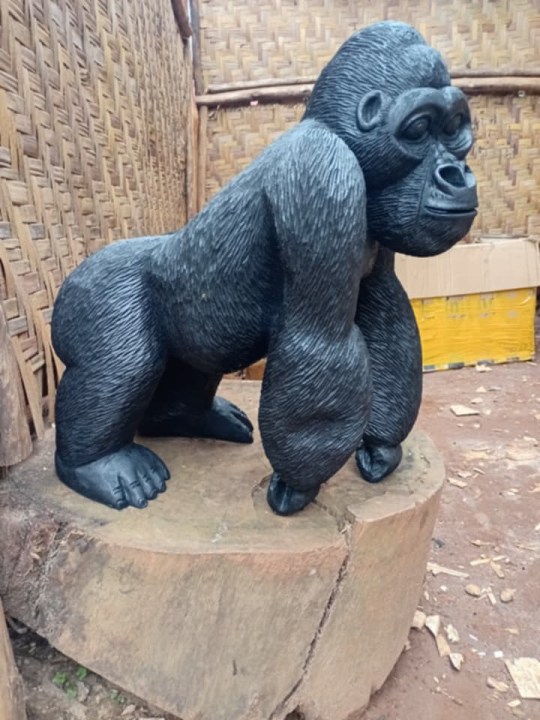

I am Byamukama Evalist from Buhoma, Bwindi, Uganda. I am 42 years old; I have a family. I have 5 kids and a wife and am an artist. I do gorilla carvings and other animals, and I carve for conservation. My life journey: I started schooling when I was 15 years old when I decided for myself because I was born in a poor family; my parents did not have money to take me to school, and even there was poor information about the importance of education at that time. I decided to go to school, and because I was a very tall and old boy, I went into primary one. I found young boys and girls; since I was old, I went into primary 2 to check whether I could find some boys who were old like me. Finally, I found 2 boys who were tall and old like me, so I started to learn. I learned for 3 years, from primary 2 up to primary 4. I stopped there because of money for school fees. When I failed to continue schooling, I went to the street, Bwindi Impenetrable National Park, where I got to know some people doing carving, and then I started to learn how to carve gorillas and other wild animals. Now I have finished 23 years in carvings, and I also taught many people how to carve gorillas and gorilla masks. I am very happy I learned many things on that hard journey, and I learned how to speak English on the street because I didn’t get a chance to go to upper classes. Challenges: I don’t have a store where I can put my carvings; I just carve and wholesale to people who have shops around the Bwindi Impenetrable Gate at a local price. I carve, but I don’t get enough money for catering to my family because I don’t have access to selling to tourists who visit us here in Bwindi, so it’s hard for me to get school fees for my kids and money for feeding them. The lack of tools, especially powered tools like big chainsaws and other tools, has slowed production. I thank John Murphy for supporting me in my artworks online and making me love my job and continue to carve for conservation.
Bwindi Impenetrable National Park is a UNESCO World Heritage site and a premier eco-tourism destination, located in southwestern Uganda. Famous for protecting over half of the world’s endangered mountain gorilla population, it offers unforgettable jungle treks, birdwatching, and immersive Batwa cultural experiences.
Gorilla Trekking & Habituation: Bwindi is home to an estimated 460 mountain gorillas spread across four primary tracking sectors: Buhoma, Ruhija, Rushaga, and Nkuringo.
Standard Trekking: Allows you to spend one magical hour with a habituated gorilla family.
Gorilla Habituation Experience: A longer, immersive four-hour session where you join researchers and conservationists to train wild gorillas to be comfortable around humans.
Biodiversity & Wildlife: At 480 square kilometers, this ancient, mist-covered rainforest is incredibly dense, hence its Rukiga name means “dark, impenetrable place.” It’s a biodiversity hotspot with 120 mammal species, including chimpanzees, African forest elephants, and various monkeys. It also has more than 350 bird species, making it a world-class destination for birdwatchers.