


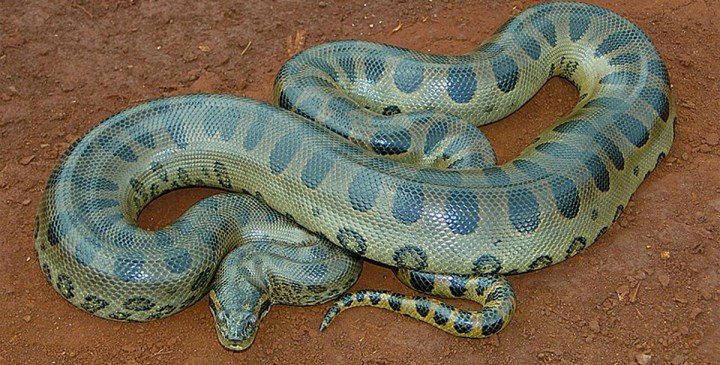
The Green Anaconda, Eunectes murinus, has long been Amazonia’s most iconic animal. It is widely regarded as the largest snake in existence. However, in a groundbreaking development, Rivas et al. published a paper in February 2024, unveiling a second species of giant anaconda, Eunectes akajima. This discovery, while not entirely unexpected due to the cryptic nature of the new species, underscores the dynamic nature of scientific understanding and the need for continuous research. The news sparked significant interest, with many recognizing the implications for our understanding of biodiversity and the urgency of reassessing conservation strategies.
In the last decade, some of the largest animals have been found to comprise two or more cryptic species. In 2014, the African elephant was recognized as two separate species—the Forest Elephant and the Savanna Elephant— both are threatened with extinction. The International Union for the Conservation of Nature (IUCN), which opted to assess the African elephant as two separate species following genetic studies of populations, has found that the forest and savanna elephants split from each other 5–6 million years ago (MYA). (Adams et al. 2014). In 2016, Fennessey et al. recognized four cryptic species of Giraffes.
Rivas et al. (2024) studied representative samples from all anaconda species throughout their distribution across nine countries. The project spanned almost two decades during fieldwork in 2022 in the Ecuadorian Amazon. The tissue collected revealed the green anaconda to be two genetically distinct species. The researchers recognized a northern and a southern species. Eunectes murinus is the southern species inhabiting Perú, Bolivia, French Guiana, and Brazil. They assigned the common name “Southern Green Anaconda”. The second newly identified species is Eunectes Nakajima, or the “Northern Green Anaconda,” found in Ecuador, Colombia, Venezuela, Trinidad, Guyana, Suriname, and French Guiana. Rivas and colleagues identified the point when the green anaconda diverged into two species almost 10 million years ago.
Morphologically, the two species of green anaconda look almost identical, and there is no obvious geographical barrier separating them. However, their level of genetic divergence is 5.5%.
The paper describing and naming the new anaconda has drawn criticism from two sets of authors (Dubois et al 2024 and Vásquez-Restrepo et al., 2024). The recognition of Eunectes akayima, is based on genetic and geographical distribution differences. However, Rivas et al. are said to have violated the International Code of Zoological Nomenclature, in several ways. The principle of priority and the rules for the designation lectotypes; and the are said to have made unjustified assumptions about the type locality of Eunectes murinus. The new species is said not to specify a specific species concept, the analysis of the molecular data based on three mitochondrial genes is said to be unreliable, and the validity of the ‘clades’ proposed in this work is questioned. The name proposed for the new species is considered a nomen nudum because it is nomenclaturally unavailable. Also the designation of a ‘lectotype’ for Eunectes murinus (Linnaeus, 1758) is said to be invalid. Dubois et al. review the nomenclatural status of 18 nominal species (including four unavailable ones) once or still now referred to the genus Eunectes, they identify their ‘types’ (nomen-bearing specimens), we designate five lectotypes, which are all specimens figured and briefly described in ancient publications, and we explain the rationale behind this action, which will allow the subsequent designation as neotypes of recently collected specimens associated with precise type localities and molecular data. show that the generic name Eunectes Wagler, 1830 does not apply to the taxonomic genus accommodating anacondas but, this name having been used for these giant and spectacular snakes for about 200 years and being well-known even outside the field of taxonomy, the authors argue that its traditional use should be maintained through an action of the International Commission of Zoological Nomenclature using its plenary power.
References
Adams, M., Raadik, T.A., Burridge, C.P. and Georges, A., 2014. Global biodiversity assessment and hyper-cryptic species complexes: more than one species of elephant in the room?. Systematic Biology, 63(4), pp.518-533.
Fennessy J, Bidon T, Reuss F, Kumar V, Elkan P, Nilsson MA, Vamberger M, Fritz U, Janke A. 2016. Multi-locus analyses reveal four giraffe species instead of one. Current Biology 26;26(18):2543-9.
Dubois A, Denzer W, Entiauspe-Neto OM, Frétey T, Ohler A, Bauer AM, and Pyron RA. 2024. Nomenclatural problems raised by the recent description of a new anaconda species (Squamata, Serpentes, Boidae), with a nomenclatural review of the genus Eunectes. Bionomina 37(1):8-58.
Rivas JA, De La Quintana P, Mancuso M, Pacheco LF, Rivas GA, Mariotto S, Salazar-Valenzuela D, Baihua MT, Baihua P, Burghardt GM, Vonk FJ. 2024. Disentangling the Anacondas: Revealing a New Green Species and Rethinking Yellows. Diversity 16(2):127. Vásquez-Restrepo JD, Alfonso-Rojas A, Palacios-Aguilar R. 2024. On the validity of the recently described northern green anaconda Eunectes akayima (Squamata